Banana Fiber: One Plant, Many Materials
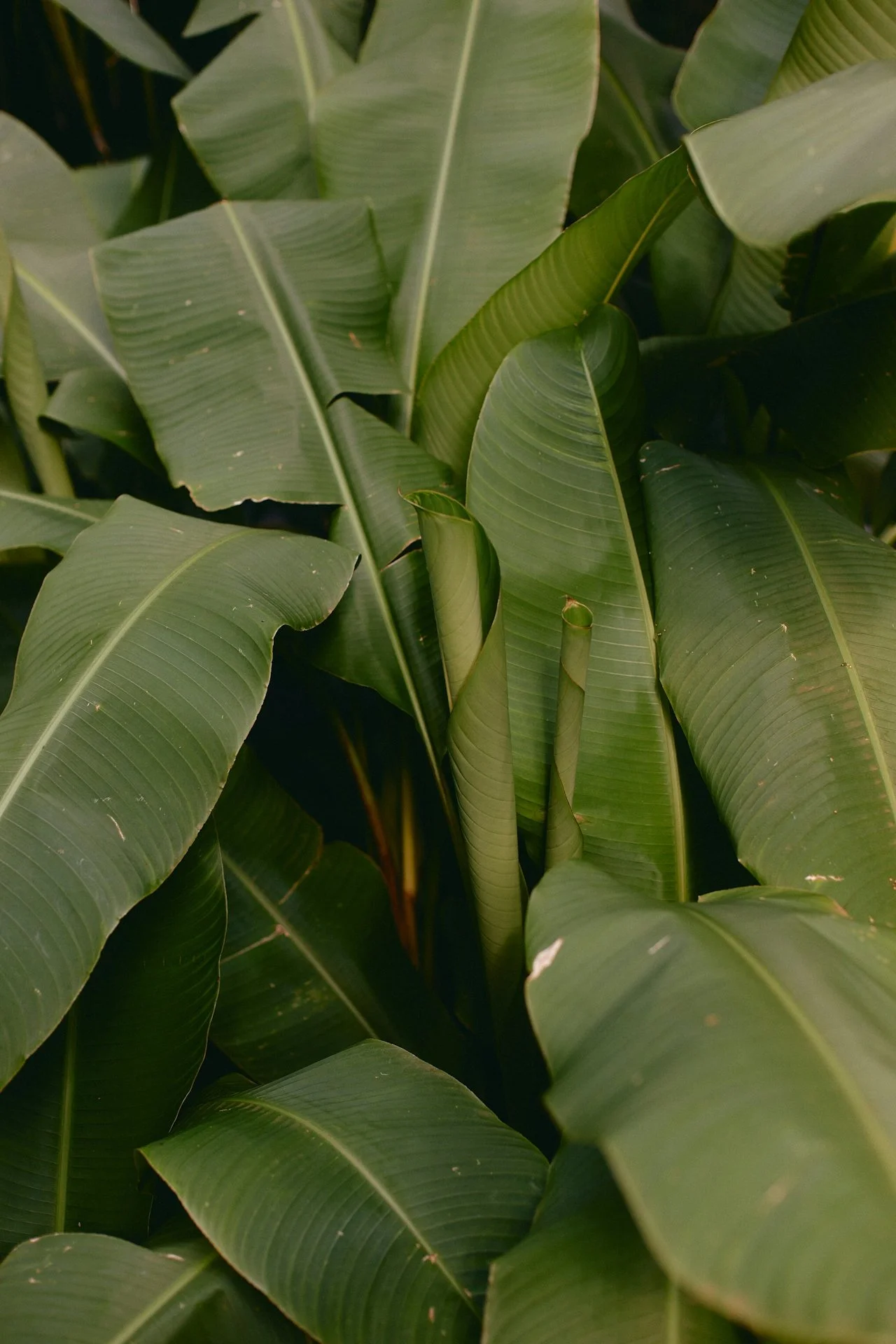
Every year, banana cultivation generates roughly 114 million metric tons of harvest residue — pseudostems, leaves, and flower stalks that most of the world burns, buries, or leaves to rot. Several companies have decided that is a raw material problem, not a waste problem. And they are solving it from entirely different directions.
What makes banana fiber unusual in the innovation landscape is that the same agricultural byproduct — and in one case, a deliberately cultivated banana species — is being processed into materials that look and perform almost nothing alike. Bananatex is a Cradle to Cradle Gold certified technical canvas used by Balenciaga and Stella McCartney. Banofi is a leather alternative sourced from Indian smallholder farm waste. Fiiba and Green Whisper spin pseudostem residue into woven apparel fabric. St3ms™ is engineering its Vybrana™ yarn to replace cotton-poly blends in performance activewear. Farm to Material in Taiwan is developing banana fiber feedstock for global sneaker brands. The plant is the same family. The supply chains, certifications, and commercial readiness could not be more different.
The Plant: Know What You're Sourcing
Banana fiber is a category, not a single material. The first due diligence question is which part of the plant and which species.
Most commercial textile applications use the pseudostem — the cylindrical trunk-like structure cut down after fruiting and typically discarded as waste. This is the feedstock for Banofi, Fiiba, Green Whisper, St3ms™/Vybrana™, and most Indian yarn producers. It yields a strong, cellulosic fiber well suited to blends, technical constructions, and leather alternatives.
Bananatex uses a different source entirely: the Abacá plant (Musa textilis), a non-edible banana species native to the Philippines cultivated specifically for its fiber. Abacá fibers run 2–3 meters long and are among the strongest natural plant fibers in the world — historically used in rope and specialty paper. This is why Bananatex performs as a durable technical canvas rather than a soft apparel fabric.
Banana silk — fine, lustrous fiber from the inner pseudostem sheaths — represents a small artisanal segment, primarily from Japan, Nepal, and the Philippines, relevant for niche luxury applications but not commercial scale.
Who's Processing It and How
Bananatex — Abacá Canvas, Philippines to Taiwan
Developed by Swiss brand QWSTION after three years of R&D and launched in 2018, Bananatex is built on dedicated Abacá cultivation in the Philippine highlands — specifically Catanduanes — as part of a permaculture reforestation program on land previously degraded by palm oil monoculture. The plants require no pesticides, fertilizers, or supplemental irrigation, and regenerate fully within a year. Fibers are extracted by hand, pressed into pulp sheets in the Philippines, shipped to a Taiwanese paper mill where they are sliced into strips and twisted into yarn, then woven into fabric. An optional natural beeswax coating adds waterproofing.
The result is 100% banana fiber, plastic-free, and Cradle to Cradle Gold certified. Dyed versions carry Oeko-Tex Standard 100. Brand partners include Balenciaga (Triple S sneaker, PETA Fashion Award 2024), Stella McCartney, COS, H&M, and MCM. Bananatex is structured as an open-source project — brands license the fabric without exclusivity, a deliberate choice to scale adoption. The honest tradeoff: the Philippines-to-Taiwan-to-market route introduces supply chain geography that brands with strict carbon footprint requirements should model carefully. Cost is also higher than waste-utilization models, where the raw material is essentially free.
Banofi and Piñatex — The Coating Problem in Bio-Leathers
Banofi and Piñatex are the two most commercially developed plant-based leather alternatives available to sourcing professionals today — and they share a structural challenge that deserves honest discussion: both rely on synthetic or partially synthetic coatings and binders that complicate their biodegradability and bio-based content claims.
Piñatex, made by Ananas Anam (Philippines/Spain), is built on Piñafelt — a non-woven base of 80% pineapple leaf fiber and 20% PLA (polylactic acid, a corn-derived bioplastic). That base is then coated with a polyurethane resin to add durability and water resistance. For the Original and Mineral collections, that coating is a water-based PU resin comprising 10% of total material composition. For the Performance collection, a high-solid PU and bio-based PU coating makes up 42% of total composition. Ananas Anam now describes Piñatex as containing up to 95% renewable and bio-based content — but the PU coating, even water-based, is a plastic that will not readily biodegrade. The base material alone is only biodegradable under controlled industrial composting conditions, not in a home compost or landfill. Ananas Anam is actively working to replace the coating with a fully bio-based alternative, but as of 2025 that transition is not complete.
Banofi, developed by Kolkata-based Atma Leather, sources banana pseudostem waste from approximately 30 smallholder farms within 20–30 kilometers of its factory. Fiber is mechanically and chemically extracted, then layered and compressed with natural binders — rubber and gum arabic — alongside a proportion of synthetic adhesives and polyurethane backing. Current composition is approximately 65% banana fiber, with the balance split between natural and synthetic components. Like Piñatex, the synthetic binder and backing elements mean the finished material is not fully biodegradable. Atma has stated a goal of 100% plant-based composition as an active development target and is working to reduce polymer dependence over time. The material holds REACH (Europe) and CAL-PROP (US) certifications, and a verified LCA documents 90% lower carbon emissions and 95% lower water use versus conventional cow leather. TÜV and SGS testing confirm performance on tear strength, adhesion, and durability.
The takeaway for sourcing professionals: both Banofi and Piñatex are meaningfully better than conventional animal leather or petroleum-based PU leather on most environmental metrics — carbon, water, toxic chemical avoidance, and waste utilization. But neither is fully biodegradable in its current construction, and both carry synthetic content that brands need to disclose accurately if making bio-based or compostability claims to consumers. The responsible sourcing question is not whether to use these materials, but how to represent them honestly — and to track the ongoing development of bio-based coatings that could resolve this limitation.
St3ms™ / Vybrana™ — Performance Yarn, USA
St3ms™, headquartered in Portland, Oregon, is the most explicitly performance-oriented entrant in the banana fiber category. Founded by a team from global brands and commercial spinning plants, the company's Vybrana™ yarn is produced from pseudostem waste and engineered to run on existing short-staple spinning infrastructure — rotor, ring, and vortex — without mill retooling. This compatibility-first design is a real commercial differentiator in a category where novel materials typically require significant manufacturing adaptation.
Yarn counts range from 6 to 20s; launch textiles include jersey knit, twill, and canvas. The company cites higher tensile and tear strength than cotton in early trials and positions Vybrana™ explicitly as a microplastic-free alternative to cotton-poly blends — a claim with direct regulatory relevance as synthetic fiber shedding standards tighten. Feedstock suppliers are verified by Rainforest Alliance and GlobalG.A.P., and St3ms™ is developing DNA-based fiber traceability partnerships. As of early 2026, the company is pre-launch with mill and brand partnerships in queue. The question to track: whether commercial wash and wear testing validates the performance claims at scale.
Fiiba and Green Whisper — Woven Apparel Fabric
Fiiba and Green Whisper both target the apparel fabric segment — positioning banana crop waste as an alternative to cotton and viscose rather than as leather or technical canvas. Fiiba exhibited at the 2024 Future Fabrics Expo, drying and spinning fibers from felled banana trees into woven fabric. Green Whisper, a France-based company, deploys decortication equipment directly in farmers' fields to extract fiber at source, then blends it with organic cotton for a biodegradable fabric construction. Both companies are earlier-stage than Bananatex or Banofi; sourcing professionals should verify current production capacity and commercial availability directly before building them into material development pipelines.
Farm to Material — Taiwan
In Taiwan's Pingtung and Changhua regions, entrepreneur Nelson Yang's Farm to Material is converting banana pseudostems into textile feedstock, targeting global sneaker brands, working closely with the Taiwan Textile Federation. Taiwan's existing fiber processing infrastructure and technical manufacturing expertise make it a credible emerging corridor for banana fiber — though as of late 2025, commercial orders from apparel brands were still in development.
Environmental Claims: What Holds Up
The waste-utilization argument is genuinely strong for pseudostem-based processors. The raw material is agricultural residue with no competing use; intercepting it avoids crop burning and creates an income stream for farmers. In India, where Banofi, most Indian yarn producers, and St3ms™ feedstock partners source their raw material, this waste diversion has verifiable air quality and carbon benefits.
The Abacá cultivation model (Bananatex) is strong on different grounds: no synthetic inputs, active reforestation contribution, and biodegradation verified in both industrial compost and marine environments by ISEGA Germany. The weakness is that it requires purpose-grown cultivation, though the reforestation framing — planting Abacá in previously degraded palm oil land — addresses this meaningfully.
Biodegradability claims require construction-level scrutiny. Pure banana fiber textiles do biodegrade. Leather alternatives with synthetic backing, fabrics blended with polyester, or constructions with synthetic coatings will not. Brands should request specific end-of-life data for the exact construction being sourced, not accept general fiber-level claims. LCA data exists for Banofi and Bananatex; for other operators it is inconsistently available and should be part of supplier due diligence.
Certifications and Traceability Gaps
Banana fiber is young enough that the certification landscape is still forming. Bananatex holds Cradle to Cradle Gold — the most rigorous standard applied to any banana fiber product — plus Oeko-Tex Standard 100 for dyed versions. Banofi holds REACH and CAL-PROP. GOTS is not generally applicable to leather alternatives or to pseudostem processors working with conventional-farm waste rather than certified organic crops. For Indian yarn producers, certification coverage is typically thin.
The most significant gap is traceability. Banana cultivation is dispersed across millions of smallholder farms across India, the Philippines, Ecuador, Indonesia, and beyond. Farm-to-fiber chain of custody is nascent for most operators. Brands with fiber transparency requirements should ask suppliers directly what documentation exists — and expect varied answers. St3ms™'s DNA traceability initiative, if it reaches commercial implementation, would be a meaningful step forward for the category.
What to Ask Before You Source
• Which part of the plant, which species? Abacá versus common banana pseudostem represents different supply chains, performance profiles, and sustainability stories. Don't conflate them.
• Waste-utilization or purpose-grown? The environmental logic and cost structure differ substantially. Waste models have strong avoided-impact narratives; cultivation models offer more supply consistency.
• What is the full material composition? For leather alternatives and technical constructions, the percentage of banana fiber versus synthetic binders and backing determines actual footprint and end-of-life performance.
• What third-party verification exists? Request LCA documentation, materials safety certifications, and any available chain-of-custody records. Don't accept general biodegradability or sustainability claims without data behind them.
• What is the commercial scale and readiness? This category spans Cradle to Cradle Gold certified materials used by global luxury brands to pre-launch startups. Diligence on production capacity is as important as sustainability diligence.
The Sourcing Horizon
Banana fiber is not a single sustainable material — it is an emerging category with multiple supply chain models and a processing landscape that is still differentiating. Bananatex is commercially proven and certification-rich, suited to brands ready to invest in premium material development. Banofi is the most credible leather alternative in the category, with verified environmental data and active commercial development. St3ms™/Vybrana™ is the most performance-oriented entrant, designed for volume compatibility rather than premium positioning. Fiiba, Green Whisper, and Farm to Material represent the next wave — real innovation, earlier stage.
What every player in this category shares is that they are building commodity markets where none existed. The agricultural waste is abundant, the fiber properties are strong, and the processing knowledge is accumulating quickly. For brands navigating both regulatory pressure on synthetics and consumer demand for traceable natural fibers, the question is no longer whether banana fiber belongs in your material palette. It is which version belongs there — and whether the supply chain behind it is ready for your timeline.
Materials Matter | Textile Sourcing Intelligence