
Navigating the Modern Leather: Supply ChainA Guide to Durability, Ethics, and Climate Impact
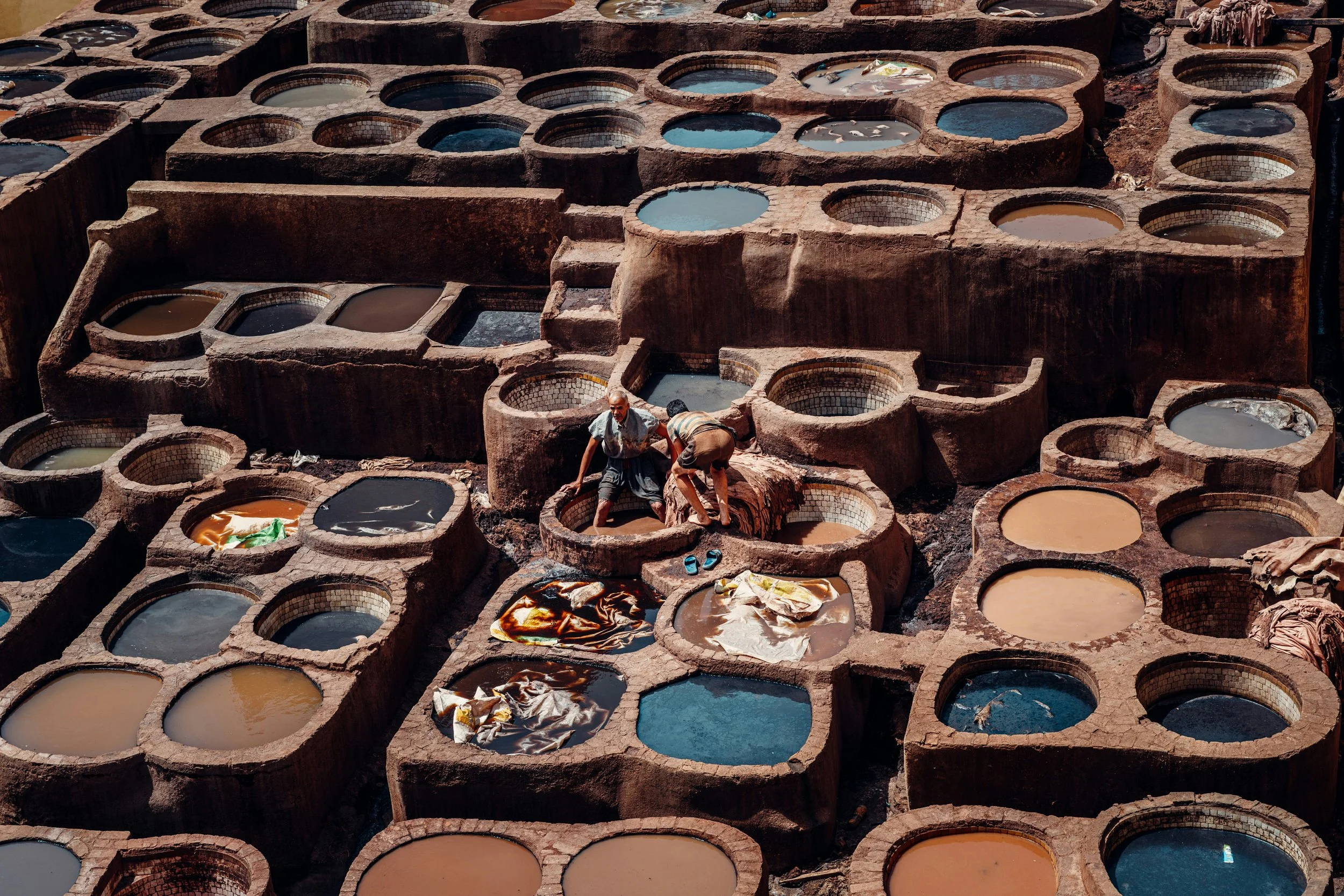
Leather seems simple at first, but the deeper you dig, the more trade-offs and complexities emerge.
At the surface, it feels straightforward—natural, durable, built to last. We all know tanneries need to be looked into. Once your step into the supply chain, it quickly expands into something much bigger: cattle systems, land use, methane emissions, tannery chemistry, and global manufacturing energy.
Over time, what becomes clear is this—leather is not just a material decision. It’s a systems decision.
This guide is designed to help brands navigate that system. Not by simplifying leather into “good” or “bad,” but by identifying where the real climate, environmental, and ethical leverage points exist—and where they don’t. Because in today’s landscape, the biggest risk isn’t using leather. It’s making decisions about it without understanding the full picture.
Leather in Context: A Co-Product of a Larger System
Leather is often described as a byproduct. In reality, it functions as a co-product of the global cattle industry—and that distinction matters.
Cattle are raised primarily for beef and dairy. Leather uses the hide that would otherwise be discarded, but it also contributes economic value back into that system. As a result, leather’s impacts are directly tied to livestock production—particularly land use and methane emissions.
Methane is a critical part of the climate conversation. It’s a potent greenhouse gas, roughly 86 times more warming than CO₂ over 20 years, so cutting methane can slow near-term warming. But focusing on methane in isolation can be misleading:
Agriculture drives ~40% of human-caused methane
Fossil fuels contribute ~35%, largely from leaks and venting
Waste accounts for ~20%
Meanwhile, when looking at total greenhouse gases, energy systems dominate by a wide margin (~70% of global emissions).
For brands, this dual lens matters. Focusing only on methane can lead to the conclusion that removing animal materials is the primary solution. In reality, the most immediate and scalable climate gains often come from energy, manufacturing, and upstream agricultural practices.
→ For a deeper breakdown, see: Re-Evaluating the Methane Report to Find Fashion’s True Climate Solution
The Leather Paradox: Emissions, Accounting, and Reality
Leather’s climate impact is often calculated using co-product accounting, assigning a portion of cattle emissions to hides. Some analyses increase this share significantly—but most lifecycle assessments allocate closer to 5–10%, reflecting leather’s secondary economic role.
This creates a practical reality:
If leather demand disappeared tomorrow, cattle production would largely continue for beef
Hides would become waste
The net effect on methane emissions would be limited
That doesn’t make leather impact-free—but it shifts where the most effective interventions are.
High-Leverage Methane Solutions
Feed additives like 3-NOP (Bovaer®), reducing enteric methane by 30–80%
Seaweed supplements (Asparagopsis), with similar reductions, though still scaling
Improved herd and land management practices
These solutions work within existing systems, delivering reductions faster than material substitution alone. For brands, the takeaway is simple: avoiding leather does not solve methane. Improving cattle systems does.
From Hide to Product: Where Brands Actually Have Control
While methane sits upstream, the most immediate and controllable impacts of leather happen during processing.
Tanning: The Critical Point of Impact
Chrome tanning dominates the leather industry because it is fast, scalable, and cost-effective—but it comes with significant trade-offs:
Heavy metal use (chromium salts)
Toxic wastewater
Worker exposure risks in under-regulated regions
Vegetable tanning offers a lower-toxicity alternative, using plant-based tannins—but requires more time, cost, and technical expertise.
For brands, tannery selection is not just a technical detail—it is a decision that affects environmental and social outcomes. Consider:
Certified tanneries (LWG Gold or Silver) for responsible water, chemical, and energy management
Vegetable-tanned leather for lower-toxicity processing and long-term durability
Traceable supply chains that minimize deforestation and uphold worker safety
Even partial adoption demonstrates responsible sourcing and reduces risk, while giving consumers confidence in the product’s ethics.
Organizations and Certifications for Better Leather
Several organizations provide guidance, certification, and support for brands seeking responsible leather:
Leather Working Group (LWG) → Audits tanneries for water, energy, chemical, and wastewater management
Fair Trade Leather Initiatives → Worker safety, fair wages, and community development
Recycled Leather Standards (RCS/GRS) → Verify recycled content and support circularity
Vegetable Tanning Cooperatives & Artisan Networks → Preserve low-toxicity, plant-based tanning methods and support skilled artisans
Traceability & Deforestation-Free Programs → Ensure hides are responsibly sourced
These certifications and partnerships are more than labels—they are decision points influencing environmental impact, social responsibility, and consumer trust.
Manufacturing Energy: The Overlooked Majority
Material choice is not the largest driver of emissions. Processing—dyeing, finishing, tanning—accounts for 50–55% of industry emissions, largely due to fossil fuel-based heat and energy.
Biggest climate gains come from:
Renewable energy adoption
Cleaner thermal systems
Supplier co-investment in decarbonization
Switching materials alone will not meaningfully reduce total impact.
Leather vs. Alternatives: A False Binary
The rise of leather alternatives—mycelium, cactus, pineapple, apple-based materials—has created new options. But framing this as a simple replacement story is misleading.
Leather uses an existing waste stream (hides)
Alternatives often require new inputs, energy, and processing
Many still rely on synthetic binders (polyurethane)
Durability often does not yet match traditional leather
What Brands Should Ask
Instead of “leather or alternative,” ask:
Which impact matters most for this product?
If durability and longevity are critical → leather may be better
If avoiding animal inputs is priority → alternatives may fit
If climate is the focus → energy and processing may matter more than material
The goal is informed material selection within a full systems view, not substitution for its own sake.
The Responsible Brand’s Approach
Leather demands intention. Key strategies:
Treat Leather as a Limited Resource
Use it where performance justifies impact, not as a defaultSource Through Verified Systems
Prioritize LWG-certified tanneries and traceabilityEngage Upstream
Support methane reduction, land management, and deforestation-free sourcingDecarbonize Processing
Invest in renewable energy across manufacturingEvaluate Alternatives Critically
Apply the same scrutiny as you would to leather
The Circular Opportunity: Where Leather Still Wins
Leather has one defining advantage: longevity
Can last decades
Can be repaired, restored, and resold
Retains value over time
From a circularity perspective, this matters. A long-life product used for 10–20 years can outperform lower-impact materials that are replaced frequently.
Vegetable-tanned leather → clearer end-of-life biodegradability
Recycled leather → extends value of existing materials
Closing Thought: Better Systems, Not Simple Substitutions
Leather sits at the center of one of fashion’s most important debates. The path forward isn’t as simple as eliminating it.
The biggest climate wins come from:
Cleaning up energy systems
Improving agricultural practices
Designing for longevity and reduced consumption
For brands, the opportunity is not to step away from complexity—but to engage with it intelligently.
Because the future of materials isn’t about choosing sides—it’s about understanding systems and acting where it actually matters.