In my last piece, I argued that hemp’s biggest barrier in knits is waste, and that most of it is born upstream at retting, degumming and spinning. I compared Jungmaven’s heavier blended tee with Opera Campi’s 98 g 100% hemp tee as two answers to the same problem.
This piece goes a level deeper. It’s written for brand owners who want to source better hemp.
The short version:
Hemp yarn fineness is limited by the fiber itself, before spinning even starts.
There are two ways to spin hemp, wet-spun long line and cottonized, and they lead to very different yarns.
Even the finest standard 100% hemp yarns are only a medium count by cotton standards.
Finer, more even yarn with less waste is possible, but it’s won at the fiber and spinning stages, not at the knitting machine.
Start with fineness
Hemp doesn’t spin as individual fibers. It spins as bundles.
Elementary fibers are fine, commonly cited at about 15–30 µm across, but short. One study puts them at around 13–15 mm, and published lengths vary widely.
Technical fibers are elementary fibers glued together with pectin and lignin, from about 50 µm to several hundred µm across. Most spinning systems process these bundles, not single fibers.
Why that matters: fineness decides how many fibers fit in a yarn’s cross-section. Rieter’s short-staple spinning handbook puts the minimum at about 30 fibers, with over 100 typical, and spinning research ties yarn evenness to that number. Thick bundles mean fewer fibers per cross-section. So a hemp yarn hits its fineness limit sooner, and every thick bundle can show up as a slub. That’s the bump Robert Jungmann describes feeling in hemp yarn.
This creates what I think of as the degumming paradox. Degum too little and the bundles stay thick, so the yarn is coarse and slubby. Degum all the way to elementary fibers and they’re too short to spin well. A Chinese patent on fine hemp yarn says it plainly: because the elementary fibers are short, part of the gum has to be kept so the bundles can be spun. Degumming is a target to hit, not a maximum to push.
One more fiber property matters for knitting: elongation. A literature review in one hemp-fiber patent puts hemp’s elongation at around 1.6%. Knitting bends yarn sharply around every needle, so a low-stretch fiber is a likely contributor to the needle breaks and dropped stitches hemp knits are known for.
Then spinning: wet-spun or cottonized
There are two main routes from hemp fiber to yarn.
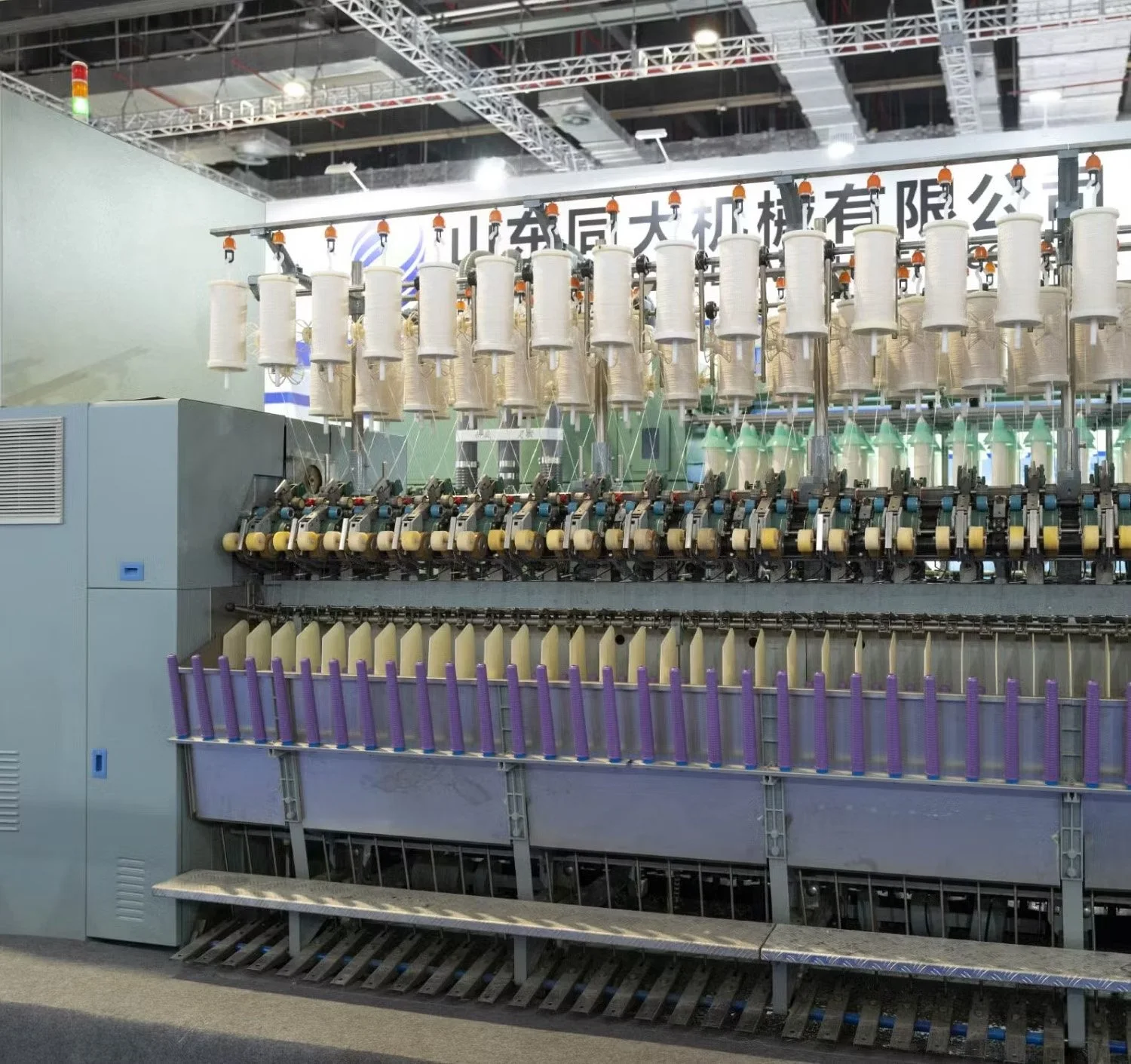
Wet-spun long line keeps the fiber long and spins it like linen. The roving runs through hot water, which softens the gums so the bundles can draft apart into a finer, smoother, less hairy yarn.
Cottonized hemp is degummed and cut to a cotton-like staple, then spun on cotton-system frames: ring, compact, vortex or rotor. It’s easier to run on existing equipment, but the yarn is coarser and hairier, and it usually needs a blend partner.
You can see the split in how suppliers list their yarns. 100% hemp is sold as wet-spun long line, in metric counts (Nm). Blends are sold as cotton-system yarns, in cotton counts (Ne). Shanxi Greenland, for example, lists pure hemp from 3 to 60 Nm and hemp/organic cotton from 5s to 40s. Hemp Fortex lists pure hemp from 3 to 100 NmL and blends from 4s to 60s.
A caution on labels. I’ve seen a reseller list a 70% cotton, 30% hemp cone as both “long fiber wet spun” and “ring spun.” Wet spinning is a long-fiber, linen-system process, while cottonized hemp runs on the cotton system, so that label doesn’t add up to me. Ask exactly how the yarn was spun, and on what frame.
The wet-spun ladder
Wet-spun 100% hemp is sold on a fairly standard ladder of counts. Qingdao Fab Mill’s product listing, posted several years ago, gives 10.5, 16, 18, 24, 36, 39 and 48 Nm. EnviroTextiles lists a similar ladder from 10 to 36 Nm.
To compare with cotton, divide Nm by 1.693 to get Ne:
24 Nm is about Ne 14. This is the count Opera Campi lists for its Superleggera knit yarn.
36 Nm is about Ne 21.
48 Nm is about Ne 28.
So even the top of the standard wet-spun ladder is a medium count by cotton standards. That matches Fibre2Fashion’s hemp yarn guide, which puts most commercial hemp yarns between 6s and 30s and calls 50s and 60s challenging. A Chinese patent describes conventional wet and dry hemp spinning as limited to roughly 20–48 Nm, and claims special degumming plus combing to go above 50 Nm.
Opera Campi doesn’t publish the count of its 98 g tee. What it does say is that its 100% hemp knitwear is made with wet-spun, long-fiber hemp. So a light hemp knit isn’t only about count. Fiber length, wet spinning and careful knitting all shape the result.
Cottonized blends: evenness falls as hemp rises
The cotton-system route has its own ceiling, and published yarn tests show where it sits.
Evenness drops with every step up in hemp. A study of Ne 20 yarns with 10%, 20% and 30% hemp across ring, vortex and rotor spinning found yarn unevenness (CVm) increased as hemp increased. The hemp-blended yarns were looser and hairier, because hemp is coarser and stiffer than cotton.
Mills cap the hemp. IND HEMP’s yarn white paper reports tenacity dropping once hemp passed 20% in an organic cotton blend, and says mill experience often limits fine yarns to about 30% hemp without special processing.
Jungmaven’s Jung Tee is 55% hemp, well above that rough 30% guide for fine yarns. Its yarn count isn’t published, and a coarser yarn can carry more hemp. But moving to a heavier fabric, as Jungmaven did, fits what the data shows.
Where fine hemp knitting yarn is made
Fine hemp knitting yarn is still mostly a China story, with a global fiber chain behind it.
China has the wet-spinning capacity. Mills in Shandong and Shanxi publish counts up to 48 Nm and beyond. The machines are made there too: one Qingdao maker rates its wet-spinning frame for flax from 5.5 to 54 Nm and says it also processes hemp.
The fiber is global. Hemp Fortex, a Qingdao mill with about 1,700 workers, has said it buys fiber from France, Germany, Turkey and Ukraine. Grown in one place and spun in another is normal.
The US is building the front half. Renaissance Fiber degums US hemp in North Carolina, and IND HEMP added a cottonizing line in Montana in October 2026. That’s ready-to-spin fiber for the cotton system. The US still has no commercial wet spinning of hemp.
Europe has deep flax wet-spinning expertise, but its wet spinners mostly make weaving yarns.
How we get to finer, more even yarn with less waste
This is the part I care most about. Every step below happens before the knitting machine, and each one is something a brand can ask its supplier about.
1. Choose fiber for spinning. Fineness and length uniformity start in the field: cultivar, harvest timing and retting. Opera Campi chose its “Dragon” cultivar from northeast China after a long search. Ask for fiber data per lot, not just a certificate.
2. Degum to a target, not a maximum. Leave the bundles fine enough to draft evenly, but long and strong enough to spin. Gentler chemistry helps. One study protected fiber from over-degumming with a 30% ethanol, 70% water system and kept tenacity at 34.2 cN/tex, an 11% improvement. Enzyme-based degumming, like CRAiLAR’s earlier work and Renaissance Fiber’s process today, is another path to softer fiber with less damage.
3. Comb out the problem fiber. Combing removes short fibers and thick bundles, which is how the Chinese patent above gets pure hemp past 50 Nm. The trade-off is that combing sets fiber aside. Ask where that short fiber goes, so a finer yarn doesn’t simply move the waste somewhere else.
4. Use water. Wet spinning is still the route to fine 100% hemp. For blends, researchers have tested droplet-wet spinning, a modified ring frame that adds a controlled drip of water at the drafting zone. On hemp/cotton yarn, the best setting gave about 22% higher tenacity and around 50% less hairiness, with roughly 20% less twist and lower spinning energy. It’s still research, but it suggests the wet-spinning advantage doesn’t have to stay inside linen mills.
5. Pick the spinning system and blend partners on purpose. Rotor and vortex yarns are generally less hairy than ring yarns, and hemp/Tencel vortex yarns have outperformed siro-spun yarns on hairiness and evenness. A fine blend partner also adds fibers to the cross-section, which is the same principle that limits hemp on its own.
6. Clear the yarn and control the lot. Electronic slub clearing catches the oversized slubs that break needles. Keeping one fiber lot and one spinner per run stops lot-to-lot swings from showing up as barré.
7. Close the loop on waste. Hemp Fortex shows a jersey knit from recycled hemp/cotton yarn respun from its own garment-factory waste. Respinning cutting waste is one practical way to recover fiber that’s already been processed.
Writing the spec
I haven’t found a published quality benchmark for hemp yarn like the ones spinners use for cotton. So I’d write the spec against a control: knit the same construction in a known cotton yarn on the same machine, and compare.
What I’d put on paper:
Count and system: Nm or Ne, singles or ply, wet-spun long line or cottonized, and the spinning system (ring, compact, siro, vortex, rotor)
Fiber: cultivar, origin, retting and degumming method, and lot number
Strength: tenacity in cN/tex, elongation at break, and strength CV%
Evenness: CVm%, thin places (−50%), thick places (+50%) and neps (+200%) per km, and the total imperfection index (IPI)
Hairiness: Uster H, or an equivalent
Twist: turns per meter and direction, set for knitting rather than weaving
Clearing and finishing: electronic clearing settings, waxing, and cone build
Lot control: one fiber lot and one spinner per run
Here’s what a supplier spec sheet can look like. Shanxi Greenland Textile lists these figures for its 36 Nm wet-spun 100% hemp knitting yarn. They’re supplier-reported, not independently tested:
Twist: 518 turns per meter, Z
Tenacity: 26.08 cN/tex
Single-yarn strength CV: 16.7%
Count deviation: −1.63%
Then add the knit-down results: needle breaks and dropped stitches per 1,000 courses, and rejects by defect type. That’s the number that ties the yarn spec to the waste I wrote about last time.
The trial I’d like to run
I’d love to run this as a real trial with a spinner and a knitter. Here’s what I’ve gathered, and here’s what I want to do.
The question: how do we make a 100% hemp tee with less waste, from fiber to finished fabric?
The setup
One fiber lot and one wet spinner, so the only things changing are the ones we choose
Wet-spun 100% hemp jersey in singles and two-ply, compared at the same total yarn weight. For example, a 24 Nm single against a 2/48 Nm, which is two 48 Nm singles plied to behave like a 24 Nm yarn.
The two-ply also run with lighter combing, to see whether plying lets the spinner keep more fiber in the yarn
Knitting set up for hemp: slower speeds, waxing, and the right gauge for each count
A slub standard agreed up front: natural slubs pass, and only holes and needle-break faults are rejected
What we’d measure
Total waste per garment: raw fiber in versus sellable fabric out
Fiber lost at the spinner, from raw fiber to finished yarn
Needle breaks, dropped stitches and rejects per 1,000 courses
The yarn spec above, and fabric weight
What it would tell us
Whether plying cuts waste enough to justify the extra step, and whether lighter combing plus a slub-friendly standard keeps more of the plant in the garment. It would also show whether the yarn spec predicts waste at the knitting machine. If it does, brands could screen hemp yarn before they ever knit it.
Plying two singles to even out weak spots is my reasoning from standard spinning practice, not a published hemp result. That’s exactly why it’s worth testing.
That’s real data instead of fiber stories, and it shows spinners exactly where to aim.
If you’re a spinner, a mill or a brand working on 100% hemp knits, I’d love to compare notes, or run this trial together.
Bonie Shupe is the founder of Rewildist, a product design and development consultancy specializing in sustainable materials, circular product design, and sourcing strategy. She has 25 years of experience in sustainable and outdoor active apparel.
Sources
Hemp fiber diameter distributions and elementary fiber dimensions, ResearchGate
Hemp fabric properties: fiber-level data, Natuclothes (fiber and bundle diameters; long- vs short-fiber systems)
Technology of short-staple spinning, Rieter (fibers per cross-section)
Cotton spinning prediction and yarn evenness, Beltwide Cotton Conferences (evenness and fiber count)
CN101831715B: Hemp fiber and preparation method, Google Patents
A critical review of characterization and measurement of textile-grade hemp fiber, ResearchGate
Cultivation systems and methods for improvement of plant bast fibers, USPTO (hemp fiber elongation)
100% hemp knitting yarn 36Nm, Shanxi Greenland Textile (supplier listing; product ranges and 36 Nm spec)
Hemp Fortex product range, Hemp Fortex (supplier listing)
Bulk hemp yarn long fiber wet spun on cone, 40s, Bulk Hemp Warehouse (reseller listing)
Hemp long fiber wet spun yarn, Qingdao Fab Mill (supplier listing)
Yarn and specialty yarn, EnviroTextiles (supplier listing)
Opera Campi Superleggera and hemp knitwear, Opera Campi
What is hemp yarn, Fibre2Fashion
Hemp as a blend constituent with cotton in vortex yarns, ScienceDirect
Yarn development from industrial hemp: a technical white paper, IND HEMP
Opera Campi – Origin (Dragon cultivar)
Rewildist – CRAiLAR: cottonizing bast fibers through enzymatic innovation
Renaissance Fiber secures $2.24 million, Textile World, October 2026
Droplet-wet spinning for high-quality hemp/cotton blend yarn, ScienceDirect
Development of fabric knitted by hemp/cotton yarn, ResearchGate (hemp/Tencel vortex vs siro)
Hemp Fortex recycled hemp/cotton jersey, Performance Days marketplace
Flax and hemp wet spinning frame, Qingdao Tongda (manufacturer listing)
“We still have the best quality hemp fiber, but it’s getting more expensive to produce”, HempToday
Textile World – IND HEMP fiber processing line, October 2026
Rewildist – Hemp’s Performance Future Starts with Yarn