What Your Merino Label Isn't Telling You
The construction tells you more than the fiber content. Here's how to read it.
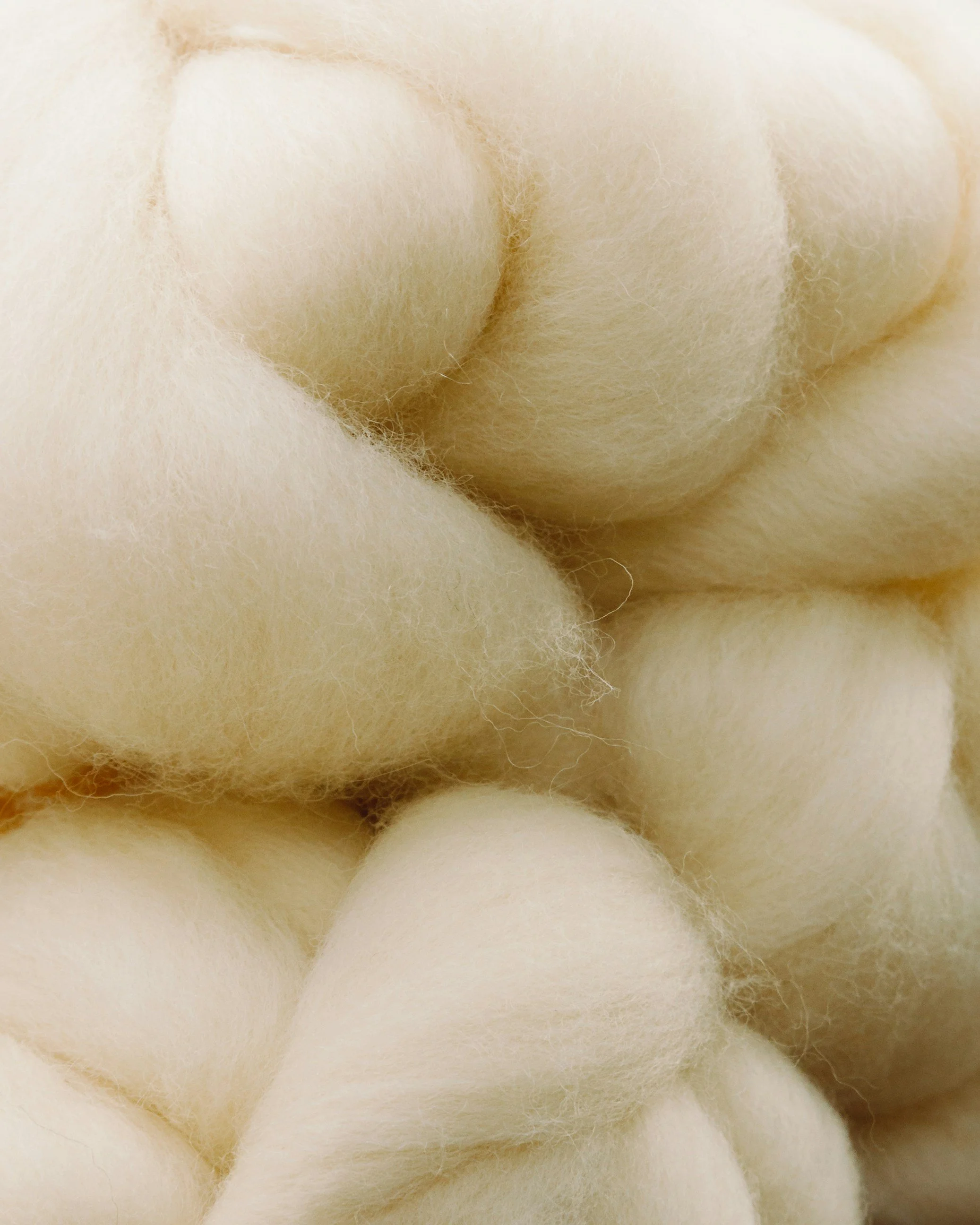
There's a conversation happening in sustainable apparel that's long overdue. It's about blends. Because I most often work with merino, let's talk specifically about merino blends — and why the decisions you make at the yarn level ripple all the way to end of life, to regulation, and to what your brand actually stands for.
I've spent 20+ years on the brand side of outdoor and active apparel. I've specced hundreds of fabrics. I've been in the mills. I've read the cert docs. And I can tell you: most brands are not thinking hard enough about what they're putting against your body, how long it will last, or what happens to it when you're done.
Let's get into it.
—
FIRST, WHAT IS A MERINO BLEND — AND WHY DOES STRUCTURE MATTER?
Not all merino blends are created equal. The architecture of the yarn matters as much as the fiber content on the label. There are four structures I see most often — and they are not interchangeable.
INTIMATE BLENDS
This is where synthetic and merino fibers are blended together at the fiber level and spun into a single yarn. Polyester and nylon are the most common partners. The result is a yarn where both fibers are present throughout — which means synthetic fiber is touching your skin. This is the construction you'll find in a lot of performance merino on the market today. Emerging science suggests this is worth scrutinizing from both a health and end-of-life standpoint, and I'll come back to both.
CORE SPUN
Here, merino fibers are wrapped around a nylon or synthetic filament core. The core provides structure, strength, and elasticity. The merino wraps the outside. Merino touches your skin — synthetic does not. Almost all major merino brands now have a nylon core option built to be lightweight and durable — typically around 88% wool, 12% nylon. It's a technology proven at scale across millions of garments. Core spun merino is 40% stronger than 100% merino of the same weight, with the nylon core making fabric more resistant to tears and abrasion.
NUYARN — TWIST-FREE CORE SPUN
Nuyarn takes core spun further. Developed in New Zealand, it drafts merino fibers around a nylon filament without twisting them — preserving the natural loft and air pockets that traditional spinning compresses. Independent testing by AgResearch NZ and Intertek Vietnam: 8.8x more abrasion resistance than ring-spun merino, 120% stronger seams, 5x faster drying. No chemical treatments. Fully mechanical. Merino is still next to the skin.
I just finished a collection built on Nuyarn. It's the best merino construction I've worked with.
NYLON FACE / MERINO NEXT TO SKIN
This is a constructed fabric — two distinct layers engineered for two distinct jobs. The face is nylon or polyester: hydrophobic, abrasion-resistant, weather-shedding. The interior is merino: soft, vapor-wicking, temperature-regulating. Merino touches your skin. Synthetic never does.
The moisture system works because the fibers have opposing relationships with water. Merino absorbs vapor from your skin microclimate before it becomes liquid sweat — pulling humidity inward. The hydrophobic face repels external moisture and accelerates evaporation from the outer surface. The result is a garment that protects you from rain and wind on the outside while actively managing body moisture on the inside. Because the face doesn't absorb water, the garment dries significantly faster than a merino-only construction when wet.
This construction typically runs heavier — it's built for high-abrasion, variable weather conditions. Think technical midlayers, hardface fabrics, pieces that need to perform under a pack or in mixed precipitation. It's not a base layer play. It's the right answer when the end use demands external durability without surrendering the comfort and health case for merino next to skin.
—
DOES ADDING SYNTHETICS ACTUALLY IMPROVE DURABILITY? THE HONEST ANSWER.
Yes — but with nuance most brands skip over.
100% merino at higher GSM can hold up extremely well. The classic "merino holes" problem — that beloved t-shirt with a hole above the hem after 18 months — is often as much about fabric weight and knit construction as fiber composition. A 200gsm+ 100% merino in the right knit can outlast a cheaper blend in real-world wear.
Where a nylon core genuinely earns its place is at lighter GSMs. When you're building a 150gsm or lighter base layer with real durability, 100% merino struggles. The nylon filament provides the structural scaffold that lets you go lighter without sacrificing longevity. Until Nuyarn, it was hard to source a reliable 145gsm merino. Their twist-free technology redefined what's achievable at lighter weights — and pushed the whole category to think differently about lightweight durability.
There's also the price point reality brands rarely say out loud: synthetic content reduces cost. Merino is expensive. Blending it with nylon or polyester can make a product more accessible — and sometimes that's a legitimate business decision. Sometimes it's a sustainability story borrowed from a material doing less work than the marketing implies. Knowing the difference is the job.
—
A NOTE ON NATURAL FIBER AND SEMI-SYNTHETIC BLENDS
Nylon isn't the only blend partner worth scrutinizing. Silk, Tencel, linen, and cotton all show up in merino programs — each with real tradeoffs that deserve honest assessment.
The full science on each of these — fiber structure, moisture mechanism, pilling behavior, and what to ask your mill before you spec — is the subject of the next post. But the short version:
Merino/silk is the most technically misunderstood. Silk is the only natural filament fiber — structurally unlike every other natural fiber. When intimately blended with merino staple, the continuous filament can anchor short wool fibers as they slough off, forming pills. With the right ratio and construction it can work beautifully. But ratio alone doesn't protect you — construction does.
Merino/Tencel is popular and often misrepresented. Tencel earns its sustainability credentials. But merino and Tencel move moisture via different mechanisms — vapor versus liquid — and in high-sweat, high-humidity conditions they can work against each other, leaving you feeling wetter than pure merino would. It's not a defect. It's a moisture mechanism conflict.
Merino/linen softens the linen hand and adds thermoregulation, but you give up the drape and softness that make merino worth the price. Occasional summer use case. Rarely right for next-to-skin performance.
Merino/cotton is almost always a cost decision. Cotton holds moisture, adds weight when wet, and contributes no thermoregulation. The merino does all the work; cotton dilutes it.
Full breakdown, with fiber science and mill questions, in the next post.
—
DOES MERINO NEXT TO SKIN MATTER FOR YOUR HEALTH? THE EMERGING QUESTION.
This is where the conversation is going — and where I want to be precise rather than overclaim.
Synthetic fabrics — polyester, nylon, acrylic, spandex — are treated with plasticizers, antimony catalysts, and PFAS finishes to achieve their performance properties. Many of these are known endocrine-disrupting chemicals (EDCs) — substances that mimic or interfere with natural hormones. A University of Birmingham study found that sweat increases the absorption of these chemicals through skin during exercise. Your workout is the highest-risk scenario for EDC exposure from clothing.
This is why intimate blends — where synthetic fibers sit throughout the yarn against your skin — are the construction worth scrutinizing most. Core spun and Nuyarn eliminate that contact. The nylon is structural and internal. Merino is the interface.
There's also the superwash question, which brands rarely address: 600 tonnes of polymer are applied to wool annually for machine-washability — 76% using the Chlorine-Hercosett process. The Hercosett resin contains epichlorohydrin, a compound of known eco-toxicity. Applied as a microns-thin layer, researchers are beginning to flag the potential for micro and nanoparticle risks. The direct EDC link to the wearer isn't yet clinically established — the primary toxicology concern is in manufacturing and wastewater. But superwash introduces a synthetic polymer coating onto a fiber you're marketing as natural, compromises merino's moisture performance, and disqualifies the garment from GOTS certification regardless of how the wool was grown.
There is not yet a peer-reviewed clinical study directly measuring EDC absorption reduction when wearing merino versus synthetic next to skin. That study should exist.
What we can say: merino next to skin means your largest organ never touches petroleum-based fiber. That's not a health claim. It's a design choice with a growing body of supporting logic.
The full EDC picture — what the science actually says, where the evidence is solid versus emerging, and what it means for how you spec activewear — is the third post in this series.
—
THE LIFECYCLE QUESTION: HOW LONG DOES IT ACTUALLY LAST?
Here's where the circularity conversation gets more honest than most brands are willing to go.
Every garment requires energy, water, chemistry, and resources to produce. The environmental math of any material decision — including adding synthetics — has to account for how long that garment will actually be used. A garment worn for ten years has a radically different lifecycle footprint than one worn for two, regardless of what it's made of.
When I was at Ibex, I wanted to institute darning kits. I felt like we were creating heritage pieces — garments worth repairing, worth keeping for a decade. That idea never fully landed while I was there, but it planted something I've carried forward. A merino garment with a darning kit is a complete product system. You're not just selling a shirt. You're selling a relationship with a garment over time.
Ibex was also quietly one of the first merino brands to think seriously about production waste. Their Reclaimed Wool Felt bags — made from felted Ibex wool scraps including the recycled polyester present in their blends, made in the USA — were an early example of a brand taking responsibility for what comes off the cutting room floor. They were doing circular thinking before anyone was legislating it.
—
WHAT ACTUALLY HAPPENS AT END OF LIFE?
Pure merino wool is genuinely circular in ways few fibers can match. It biodegrades in soil. Research from the Centre for Colour and Textile Science at Leeds University shows wool products have a potential active life of 20–30 years and can be recycled through mechanical processes. The Prato region of Italy has been mechanically recycling wool for over a century.
A merino blend — including core spun and Nuyarn — is more complicated. The nylon filament, even when structural and internal, complicates mechanical recycling. Fiber separation technology for wool/nylon blends is still nascent. Most blended textile "recycling" in the US today is downcycling — shredding for insulation or filling — which only delays the inevitable landfill endpoint.
Smartwool has done the most visible work on this problem at scale. Their Second Cut Project, launched in 2021, has collected over 1.8 million socks and diverted more than 150,000 pounds from landfill. They partner with Material Return, a North Carolina-based circularity platform, to deconstruct, clean, and reprocess donated socks. Old Smartwool socks get respun into new Second Cut Hike Socks — the first circular sock. Socks of any other brand get turned into filling for their Second Cut K9 Camp Cushions, sold on Smartwool.com. It's a real program, not a PR exercise, and the clearest model in the merino space of what brand-led circularity looks like in practice.
The honest reality: if you're not building a take-back or resale program, you probably don't have a circularity story. You have a material story. Those are different things.
—
SB 707: THE LAW THAT CHANGES THE CALCULATION
In September 2024, California Governor Gavin Newsom signed SB 707 — the Responsible Textile Recovery Act — into law. It is the first Extended Producer Responsibility program for apparel and textiles in the United States.
On February 27, 2026, CalRecycle approved Landbell USA as the Producer Responsibility Organization. All qualifying producers must join by July 1, 2026. Full implementation and enforcement begins July 1, 2030, with penalties of up to $50,000 per day for intentional violations. Brands under $1 million in annual global revenue are currently exempt — but New York, Washington, and Massachusetts are all watching. This is not a California-only story for long.
Here's what most brands are missing: SB 707 is not just a compliance fee. It's a design incentive.
The law uses eco-modulation — fees are adjusted based on the environmental performance of your products. Brands that design for durability and recyclability, that already have take-back or repair programs in place, pay lower fees. Brands selling blended, hard-to-recycle garments with no end-of-life plan pay more.
The law also explicitly prioritizes repair and reuse over recycling. PROs must partner with secondhand markets, thrift stores, and repair organizations. Darning kits, repair guides, worn wear resale programs — these aren't just good brand storytelling anymore. They're a compliance strategy with a financial benefit attached.
The blend decision you make in 2025 is the decision you'll be financially accountable for in 2030.
—
WHAT BRANDS SHOULD BE DOING RIGHT NOW
The through-line from Ibex's reclaimed wool bags to Smartwool's sock program to SB 707 is the same: brands that thought about end of life before they were required to are the ones with real options when regulation arrives.
Here's the framework I use with clients:
1. Know your construction. Intimate blend, core spun, or constructed fabric? Where is the synthetic? What is it doing? Can you justify it as a performance decision?
2. Know your GSM rationale. Is the synthetic enabling a lighter, more durable garment — or is it a cost decision dressed as a sustainability story?
3. Design for longevity. A garment worn for ten years already wins the lifecycle math. Darning kits, repair guides, quality construction — these are product decisions, not marketing decisions.
4. Build a take-back pathway now. You don't need Smartwool's infrastructure. Material Return works with brands of all sizes. Partnerships with local repair cooperatives or resale platforms are accessible entry points. Under SB 707, having a program before 2030 is a financial advantage.
5. Be honest about the tradeoffs. Core spun and Nuyarn are performance decisions with real end-of-life limitations. Saying that out loud doesn't undermine your brand — it builds the trust that makes customers come back and return garments instead of throwing them away.
The brands that will lead the next decade of merino aren't the ones with the purest fiber story. They're the ones that can hold the whole lifecycle — fiber to skin to end of use — with transparency and a plan.
—
Next in this series: Natural Fiber Blends — the full science on silk, Tencel, linen, and what to ask your mill before you spec. And: What the EDC conversation actually means for how you make activewear.