Angora: The Softest Fiber, Shrouded in Controversy
I’ll be honest: I wasn’t sure angora was even worth writing about anymore. Most major brands walked away from it years ago, and in sustainability circles, the conversation felt… settled. But while researching current listings, I was surprised to see that Goop only removed angora from its site in November 2025. That was just months ago — a reminder that what feels resolved inside the industry often lingers far longer in the marketplace.
And if you’re still not clear on why angora remains so controversial, it’s time to catch up. Multiple investigations — including this one from PETA — have documented severe welfare issues in conventional angora production. This isn’t an outdated scandal; it’s an ongoing supply-chain problem hiding in plain sight.
Despite its undeniable beauty and softness, angora has become one of fashion’s most ethically fraught materials. This guide breaks down what angora is, why the controversy hasn’t gone away, and what responsible sourcing looks like today.
What Is Angora Wool? The Downy Coat of a Rabbit
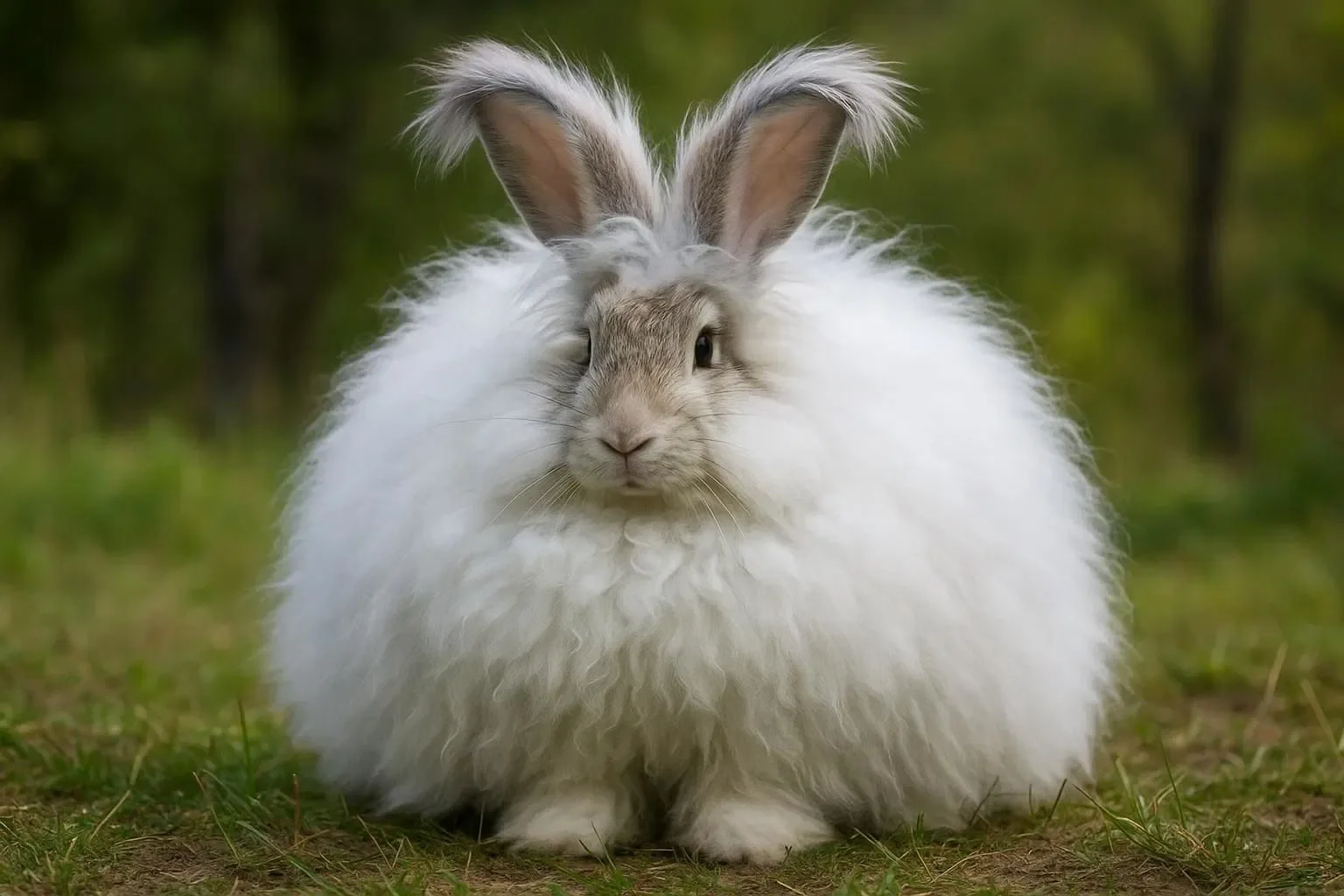
Angora wool comes from the impossibly soft undercoat of the Angora rabbit — not to be confused with mohair, which comes from Angora goats. The fiber is hollow, ultra-lightweight, and incredibly warm, often cited as being up to nine times warmer than sheep’s wool. Its famous fluffy “halo” gives angora garments their ethereal, delicate look.
Angora rabbits have been bred for fiber for centuries, beginning in Ankara, Turkey, before spreading to France and across Europe. But today, more than 90% of the world’s angora supply is produced in China, where animal-welfare regulation is minimal.
That imbalance is a major driver of the controversy.
From Rabbit to Runway: How Angora Wool Is Produced
The production process is delicate, labor-intensive — and at times deeply troubling.
Cultivation
Rabbits are kept on farms ranging from small homesteads to large industrial systems. Their coats grow continuously, requiring routine grooming to prevent matting.
Harvesting: The Most Controversial Stage
Angora can be collected in two ways:
1. Plucking (Live-Plucking)
Traditionally, loose molting fur is pulled out by hand. On paper, this can be painless if done during a natural shed. In reality, undercover footage has repeatedly documented rabbits being forcibly restrained and having fur ripped from their skin — often screaming in pain.
Plucking yields longer fibers, giving factories a financial incentive to continue the practice.
2. Shearing
The rabbit’s coat is clipped with scissors or electric shears. It avoids follicle pain, making it the more humane method, though it can still be stressful for a sensitive prey species. Accidental cuts are a risk due to the rabbit’s delicate skin.
Sorting, Carding & Spinning
After harvesting, fibers are sorted, carded, and spun into yarn with angora’s signature airy bloom.
The Ethical Crisis: Animal Welfare Failures in Angora Farming
Angora’s reputation has been shaped less by the fiber itself and more by the welfare issues documented across conventional supply chains.
Live Plucking
Videos show rabbits screaming as their fur is violently pulled out, leaving raw, bleeding skin. These images catalyzed global brand bans and reshaped consumer perception.
Intensive Caging
Most industrial farms confine rabbits in tiny wire-mesh cages, preventing movement, social interaction, and natural behaviors. The wire floors can cause painful sores.
Selective Breeding & Health Risks
Angora rabbits are bred for extreme coat density, making them prone to wool block — a potentially fatal internal blockage caused by ingesting their own fur.
Shortened Lifespan
While pet rabbits can live 10+ years, fiber rabbits on industrial farms are typically slaughtered after two to five years once their wool output declines.
Minimal Regulation
China has no federal animal-cruelty laws, and angora farms rarely face inspection or enforcement.
These systemic issues are why so many brands moved away from angora entirely.
Industry Response: Where Change Has Happened — and Where It Hasn’t
Brand Bans
Hundreds of brands — from H&M to Zara to Gucci — have removed angora from their supply chains. These commitments significantly reduced global demand.
Small-Scale Humane Producers
A tiny number of micro-farms raise Angora rabbits like pets and harvest fiber only during natural molting. These systems rely on gentle combing, social housing, enrichment, and individualized care.
But they are:
rare
expensive
unscalable
almost entirely disconnected from mass-market fashion
This "humane angora" exists, but it is not a realistic supply-chain solution for large brands.
Attempts at Standards
Unlike down (RDS) or mohair (RMS), angora has no widely accepted, trusted global animal-welfare certification. Attempts have been made, but no standard has earned strong support from animal-welfare organizations.
Certifications & Claims: What Can You Trust?
The short answer: very little.
There is no global “ethical angora” certification.
Many brand claims rely on self-regulation or supplier promises without auditing.
The only reliable source is direct relationships with small, transparent farms — not scalable for commercial fashion.
If a product claims “ethical angora,” it’s worth approaching with caution.
End of Life: Biodegradability vs. Practical Use
Biodegradable
Pure angora, like other protein fibers, is fully biodegradable.
Durability Issues
Angora is delicate, prone to shedding, and often blended with synthetics for stability — which reduces biodegradability.
Recycling Challenges
Because the fiber is fine, slippery, and commonly blended, angora has no established recycling stream.
Making an Informed Choice: Should You Buy Angora?
For most consumers and brands, the answer is simple:
1. Avoid Conventional Angora
This is the position of nearly all major animal-welfare organizations.
2. Choose Humane Alternatives
Comparable soft, warm options include:
responsibly sourced alpaca
GCS/SFA-certified cashmere
mulesing-free merino
TENCEL™ Lyocell blends for a plant-based softness
3. Support Brands That Have Dropped Angora
Consumer pressure works — and it has already reshaped the market once.
4. If You Insist on Angora
Only buy from:
small-scale farmers
transparent online artisans (e.g., Etsy)
sellers who openly show their harvesting process
This requires time, research, and trust — and will never be the norm for mainstream fashion.
Final Takeaway: Softness Isn’t Worth the Suffering
Angora wool is a study in contrasts: a fiber that feels angelic yet has been produced through practices that are anything but.
Until transparent, independently audited, humane systems exist at scale — and they currently do not — the most responsible choice is to leave angora off the shelf and choose alternatives that align with both comfort and compassion.