Sourcing Nylon for a Circular Future
Nylon—also known as polyamide—is the original synthetic wonder fiber that changed the way we dress and live. From stockings to backpacks, its exceptional strength and elasticity have made it a cornerstone of modern textiles.
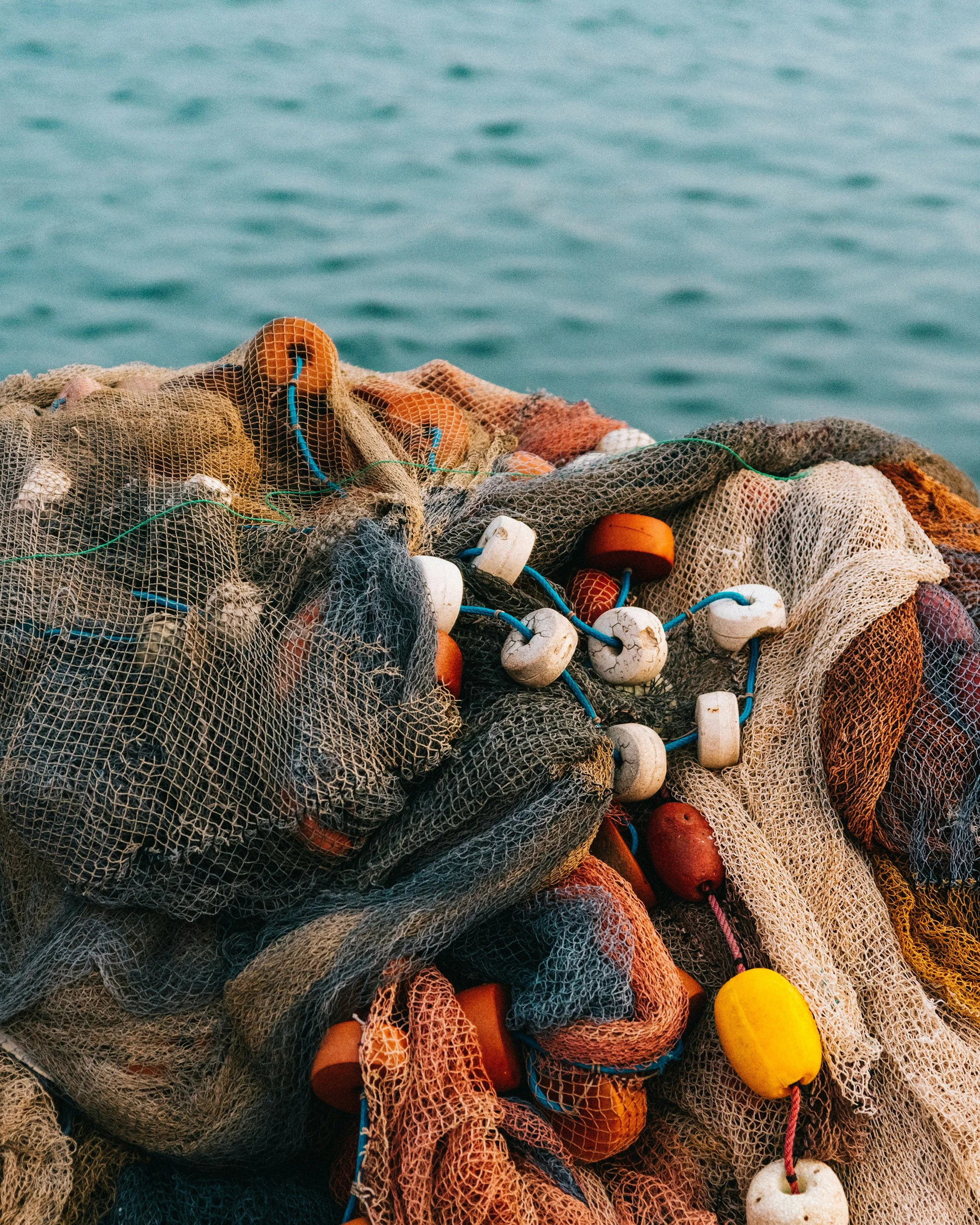
But nylon’s legacy of innovation is now overshadowed by a significant environmental footprint. At the end of its life, nylon doesn’t biodegrade and is a major contributor to microplastic pollution. The most visible example of this waste? Ghost nets—discarded fishing nets that pollute oceans and kill marine life.
For brands committed to sustainability, the challenge is clear: we must move from a fossil-fueled system to one that is circular and regenerative.
The Core Problem: Fossil Fuel Dependency and Persistent Waste
The traditional production of virgin nylon locks the textile industry into a non-renewable system, generating two main issues:
Fossil-based origins: Virgin nylon is made from petroleum, linking the textile industry to non-renewable resource extraction.
High climate impact (with Nuance): While derived from fossil fuels, the most potent emissions associated with nylon 6,6 production (specifically the creation of adipic acid) are nitrous oxide (N₂O) a gas 300 times more potent than CO₂. However, many major global chemical producers now widely utilize catalytic abatement technologies to capture and convert over 90% of N₂O into harmless nitrogen and oxygen, significantly reducing this specific climate impact.
Persistent waste: Nylon products persist in landfills and oceans for centuries, fragmenting into microplastics that harm ecosystems.
A New Path: Circular and Bio-Based Innovations
The most responsible strategy for brands is to phase out virgin nylon and invest in circular and bio-based alternatives.
1. Textile-to-Textile Recycling (The Closed Loop)
The ultimate goal is a closed-loop system where old nylon garments are transformed into new ones. This frontier is key to achieving a truly circular textile economy.
Enzymatic Recycling: New breakthroughs—like Samsara Eco’s enzymatic process, used by Lululemon—use enzymes to break down Nylon 6,6 into its base components. The result: new, virgin-quality nylon with dramatically lower impact.
Chemical Recycling for Blends: Companies like BASF and Inditex are pioneering Loopamid, a fully circular Nylon 6 made from textile waste, including tough blends with elastane. Zara’s recent jacket made from Loopamid shows how circular design is becoming commercially viable.
The Challenge of Scaling Textile-to-Textile Recycling
While these innovations are promising, scaling them to replace virgin nylon faces hurdles:
Collection and Sorting Infrastructure: Automated, high-volume collection and accurate sorting systems for textile waste are still in the early stages and require massive global capital investment.
Fiber Blends: The prevalence of nylon blended with elastane (spandex/Lycra) and other fibers makes separation difficult and costly, often preventing true fiber-to-fiber recycling.
Feedstock Purity: Recycling technologies require pure input. Mixed, dirty post-consumer waste is a current bottleneck.
Recycled Nylon Alternatives (Available Now)
For a tangible circular solution today, brands can source mechanically recycled nylon from post-consumer or pre-consumer waste streams such as fishing nets, carpets, and production scraps.
ECONYL® (Aquafil – Washington, D.C., USA): This material is 100% regenerated nylon made from discarded fishing nets, old carpets, and fabric scraps. It delivers virgin-quality performance with a dramatically reduced footprint.
🔗 econyl.com
NetPlus® (Bureo – Oxnard, California, USA): NetPlus yarns are recycled nylon made from discarded fishing nets. Bureo collects and transforms marine waste into performance materials for textiles and hard goods.
🔗 bureo.co
GREENLON® by Chainlon® (Chain Yarn Co. – Taichung City, Taiwan): This is a high-quality recycled filament yarn made from pre-consumer nylon production waste, established in 2014. It focuses on reducing manufacturing waste, energy use, and carbon emissions.
🔗 greenlon.com
Bio-Based Nylon Alternatives
Bio-based nylon represents an important step toward decoupling the fiber industry from fossil fuels by using renewable feedstocks like castor oil, corn, or biomass.
💡 Important Note: Bio-based does not mean biodegradable. Many are chemically identical to conventional nylon and will still shed microplastic fibers and persist in the environment.
Non-Biodegradable Bio-Based Nylons
(These materials reduce fossil fuel use, but still persist in the environment)
EVO® by Fulgar (Castel Goffredo, Italy): Made from castor oil and industrial corn. It offers high-performance, lightweight yarn suitable for sportswear and hosiery. Chemically identical to nylon 11 (PA11).
🔗 fulgar.com
SENSIL® ByNature (Nilit – Migdal HaEmek, Israel): A bio-based Nylon 6.6 made from reclaimed biomass such as organic waste biogas. Chemically identical to PA66.
🔗 nilit.com
Ecodear® Nylon (Toray Industries – Tokyo, Japan): Derived from castor oil and corn. Chemically identical to nylon 510.
🔗 toray.com
Castlon™ (Unitika – Osaka, Japan): This is 100% plant-based nylon derived from castor oil, offering strength and lightweight properties. Chemically identical to PA11.
🔗 unitika.co.jp
VESTAMID® Terra (Evonik – Essen, Germany): A family of bio-based polyamides (PA610, PA1010, PA1012) made from castor oil.
🔗 vestamid.com
TERRYL® (Cathay Biotech – Shanghai, China): Bio-based $\text{PA56}$, made from renewable plant feedstocks (up to 100% bio-content). Chemically similar to nylon 66.
🔗 cathaybiotech.com
Biofeel® PA (RadiciGroup – Gandino, Italy): Derived from sugarcane, corn, and castor oil. It is a bio-based PA610.
🔗 radicigroup.com
Biodegradable or Compostable Bio-Based Alternatives
(Designed to break down into natural elements in soil or water under specific conditions)
Terramac™ (Unitika – Osaka, Japan): A biomass-based polymer made by fermenting plant-derived sugars (corn, sugarcane). It is fully biodegradable, breaking down into water and CO₂.in the natural environment.
🔗 unitika.co.jp
Designing for Circularity
Circularity starts at the design table. Brands must shift focus from end-of-life disposal to continuous material regeneration:
Use monomaterials (100% nylon) to simplify recycling.
Avoid unnecessary blends that complicate material recovery and separation.
Invest in take-back systems to close the material loop and guarantee clean, available feedstock.
Nylon isn’t biodegradable—but that’s not a flaw if it’s kept in a continuous loop. The future of nylon lies in regeneration, not disposal. Brands that design for recyclability, source circular inputs, and participate in recovery systems will define the next chapter of this iconic fiber—one where durability and responsibility go hand in hand.