Camel Hair: Navigating a Responsible and Resilient Desert Fiber Supply Chain
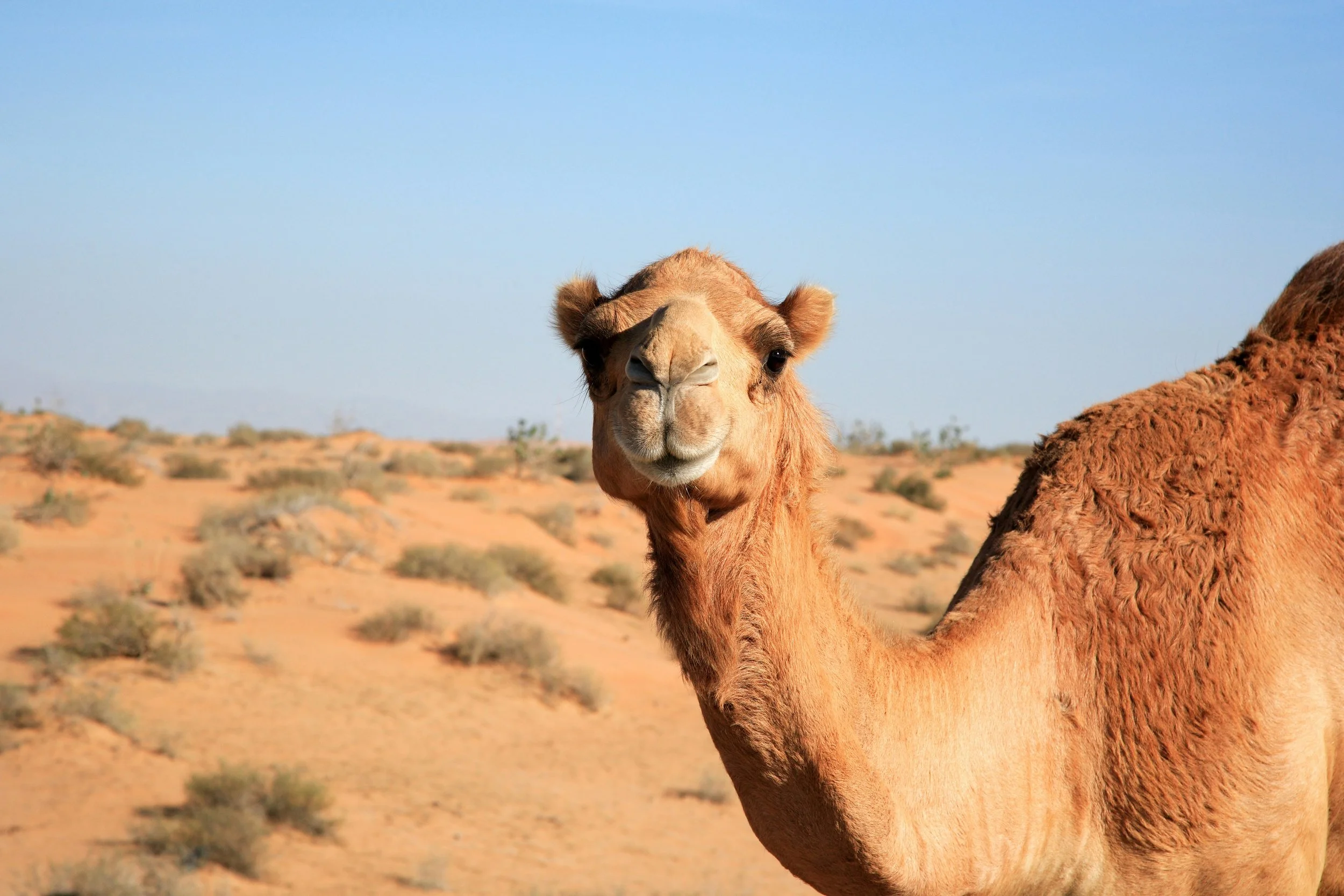
A Guide to Quality, Ethics, and Sustainability
Camel hair is one of the world’s most enduring natural fibers—shaped by extreme climates, nomadic pastoral systems, and centuries of cultural knowledge. Sourced primarily from Bactrian camels living across Mongolia, northern China, and Central Asia, this fiber evolved to protect animals from some of the harshest temperature swings on Earth.
Often framed as a luxury material, camel hair is better understood as a performance fiber rooted in survival. Its warmth, breathability, and durability are inseparable from the fragile social and ecological systems that produce it. For brands, camel hair presents both opportunity and responsibility: exceptional functional potential paired with limited supply, climate vulnerability, and uneven transparency.
When sourced with intention, camel hair can support resilient pastoral livelihoods and long-life product design—offering a compelling model for circular, low-impact textile systems.
What Is Camel Hair?
Camel hair comes primarily from the fine undercoat (“camel down”) of Bactrian camels. This down grows beneath coarse guard hairs and is naturally shed during seasonal molting in the spring.
Unlike industrial livestock fibers, camel hair is not continuously shorn. Responsible collection relies on:
Gentle hand-combing during molting
Collecting naturally shed fiber
Limited shearing only when necessary for animal health
Fiber fineness typically ranges from 18–24 microns, depending on region, climate, and sorting precision. Proper dehairing is essential to achieve softness and comfort.
Key Performance & Material Characteristics
Camel hair’s physical properties are a direct response to extreme desert and steppe environments.
Thermal Regulation
Excellent insulation combined with breathability allows camel hair to perform across wide temperature ranges.Lightweight Warmth
Hollow fibers trap air efficiently, delivering warmth without excessive bulk.Durability & Resilience
Strong fibers resist abrasion and deformation, making camel hair ideal for long-life garments.Moisture Management
Naturally hygroscopic—absorbs moisture vapor without feeling damp.Low Grease Content
Contains minimal lanolin, reducing the need for aggressive scouring and chemical processing.Natural Coloration
Warm browns, tans, and golden hues are often left undyed, supporting lower-impact processing.
What Camel Hair Is Used For
Camel hair performs best in timeless, functional categories where durability and comfort matter more than trend cycles.
Common applications include:
Outerwear - Coats, jackets, and capes benefit from camel hair’s insulation-to-weight ratio and longevity.
Knitwear - Sweaters, scarves, and accessories requiring warmth, softness, and breathability.
Tailored Apparel - Used in suiting and structured garments for strength, drape, and refined texture.
Blankets & Home Textiles - Traditionally used for throws and bedding in cold climates.
Camel hair loses integrity when over-blended with synthetics or used in fast-fashion applications that undermine its natural lifespan.
Global Sourcing & Pastoral Systems
Camel hair is sourced from multi-purpose pastoral systems, not fiber-only operations. Bactrian camels are central to herder livelihoods, providing:
Transport
Milk and meat
Fiber
Cultural continuity
Primary sourcing regions include:
Mongolia
Inner Mongolia (China)
Parts of Central Asia
Herders rely on environmental balance and long-term animal health. Fiber production is secondary to herd survival, making camel hair inherently limited and non-scalable.
From Herd to Hand: How Camel Hair Is Made
Camel hair’s journey from animal to garment depends more on human knowledge than industrial automation.
Pastoral Grazing - Free-ranging camels graze on native vegetation across arid and semi-arid landscapes.
Seasonal Fiber Collection - During spring molting, fiber is gently combed or gathered—never rushed or forced.
Sorting & Dehairing - Fine down is separated from coarse guard hairs. Precision here determines softness and end use.
Minimal Processing - Low-oil content allows for gentle washing with reduced water and chemical inputs.
Spinning & Fabrication - Fiber is spun into yarns or woven into fabrics for outerwear, knitwear, and blankets.
This system preserves both fiber quality and pastoral knowledge while limiting overproduction.
The Ethical Reality of Camel Hair
Camel hair’s greatest challenge is economic vulnerability, not material performance.
Herders often face:
Geographic isolation
Limited market access
Dependence on intermediaries
Increasing climate volatility
As with alpaca and yak, the final market value of camel hair rarely reflects what herders receive for raw fiber.
Best Practices for Responsible Camel Hair Sourcing
Brands committed to ethical sourcing should:
Work directly with herder cooperatives where possible
Ensure seasonal, non-invasive fiber collection
Verify regional origin and processing steps
Invest in long-term purchasing relationships
Use camel hair in limited, premium applications
Favor natural colorways and minimal processing
Communicate clearly about rarity, care, and longevity
Camel hair rewards restraint—not scale.
Circularity & End-of-Life
Camel hair aligns naturally with circular design principles:
Durability: Built for long wear with proper care
Biodegradability: 100% natural protein fiber
Repairability: Suitable for mending and reuse
Low-impact processing: Natural colors reduce dye use
With thoughtful design and care, camel hair garments can last for decades.
Camel Hair Sourcing Directory
If you’re looking to add camel hair to your next collection, these stakeholders and suppliers offer commercial camel hair yarn, spun fiber, or camel-inclusive yarn solutions. Because camel hair remains a niche fiber, transparency and verification are especially important — always request technical data, traceability documentation, and processing information before placing orders.
Mills & Processors
Pozzi Electa (Italy)
https://www.pozzielecta.it/en/yarn-camel/
An Italian spinning mill with decades of experience processing luxury animal fibers. Pozzi Electa produces camel hair yarns (both pure and blended options), carded and combed, suitable for apparel and fine outerwear applications. Known for technical control and traditional wool-spinning expertise.
Xincui Cashmere & Camel Hair Processing (China)
https://www.xc-cashmere.com/about-us
A vertically integrated fiber processor and spinner in China that handles scouring, dehairing, and spinning of noble animal fibers including camel hair. Offers B2B supply of camel yarns and fibers with OEM/ODM capabilities, making them a viable partner for brands seeking larger volumes.
Lana Gatto (Italy)
https://www.lanagatto.it/it/lana-gatto/
An established Italian yarn brand producing high-quality yarns. While not exclusively camel hair, Lana Gatto’s portfolio includes camel hair and camel blends used by designers and manufacturers for premium knitwear. Their product range is accessible through specialty yarn distributors and can be integrated into apparel collections.
Final Note
Camel hair is a limited, high-value fiber with a small number of commercial spinners. These partners represent the strongest options currently available for industrial-grade yarn and fiber supply — from pure camel hair to camel-inclusive blends.
Because traceability varies by supplier:
Request origin documentation (region, herd practices, dehairing location).
Ask for technical specifications (micron, length distribution, staple strength).
Clarify minimum order quantities (MOQs) and lead times upfront.
Camel hair is not scale-ready like merino or cashmere — but when sourced with intention, it offers distinct performance and circular value.