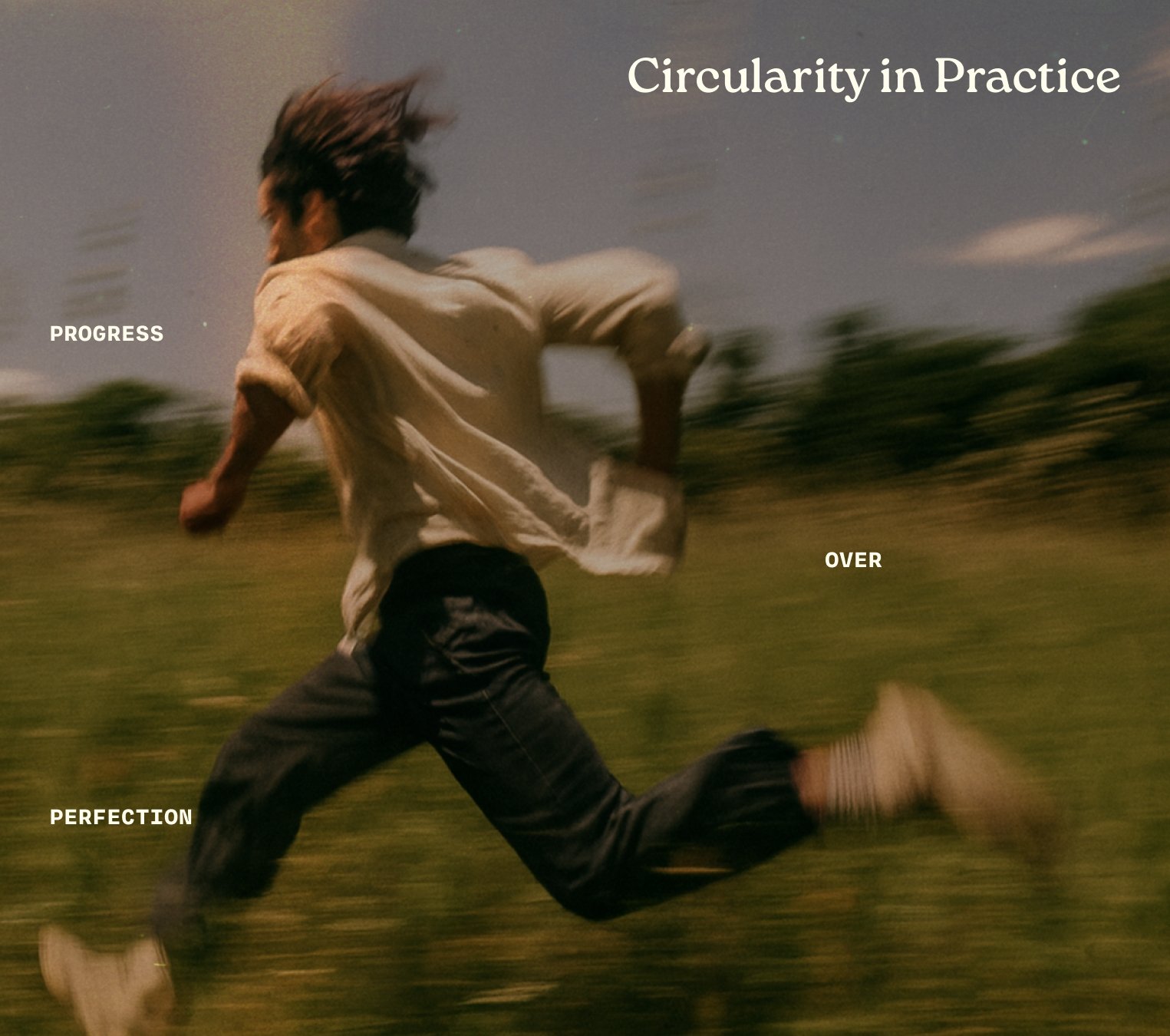
Circularity in Practice: Progress over Perfection
Last week, I shared my framework for circular design—four standards that help us evaluate whether products and systems are truly circular or just cycling through familiar patterns of extraction and waste.
I know circularity can feel overwhelming, especially when it's framed as an all-or-nothing transformation. That's not how I approach it. My role is to help you find practical, manageable entry points—small shifts that fit current realities and build toward long-term change. Progress beats perfection every time.
Progress Over Perfection
Circularity is a direction, not a destination you arrive at all at once.
The brands making real progress aren't the ones waiting until they can check every box. They're the ones choosing one material differently this season. Mapping one tier of their supply chain this quarter. Asking one harder question about end-of-life before finalizing a new product line.
This isn't about lowering standards—it's about recognizing that sustainable transformation happens through accumulated decisions, not singular declarations.
When I talk about my Circular Standards—traceable by design, materials that matter, interconnected impact, and waste reduction—I'm not suggesting brands must achieve all four perfectly before they can claim progress. I'm offering a framework for knowing which baby step to take next, and why it matters within the larger system.
What Baby Steps Actually Look Like
Starting with Visibility
You don't need full supply chain transparency on day one. But you can start asking: Do we know where this material actually comes from?
- Request mill certifications for one key material category
- Map your Tier 1 suppliers and ask them who their suppliers are
- Choose one product and trace it backwards as far as you can
Each of these actions creates knowledge that wasn't there before. That knowledge becomes the foundation for better decisions downstream.
Making Materials Choices Conscious
You don't need to eliminate every synthetic fiber or problematic process immediately. But you can start choosing differently, one decision at a time.
- Research one alternative material for next season
- Ask your dye house about their wastewater treatment processes
- Eliminate one harmful chemical finish from your standard specs
- Source organic cotton for one product line while conventional remains in others
The goal isn't perfection across your entire catalog. It's building expertise and infrastructure through practice, so the next conscious choice becomes easier than the last.
Building Relationships That Matter
Certifications provide structure and verification—and they have their place. But circularity also requires human relationships and ongoing engagement.
- Visit one production facility in person
- Have an honest conversation with your manufacturer about their challenges
- Ask workers what would meaningfully improve their conditions
- Build direct relationships with artisan communities rather than only working through intermediaries
These aren't one-time audits. They're ongoing commitments that deepen over time.
Designing for What Comes Next
You can't redesign your entire product line for end-of-life overnight. But you can start designing the next collection with that question built in from the beginning.
- Eliminate unnecessary blended fibers in one product category
- Design one capsule collection to be fully mono-material
- Add repair instructions to your care labels
- Start a pilot take-back program, even if it's small
Even limited programs create learning opportunities. You discover what works, what doesn't, and what infrastructure you'll need to scale responsible end-of-life solutions.
Why Small Steps Still Count
There's a tension here that I want to name directly: baby steps can be co-opted. Brands can point to minor improvements while their fundamental business model remains extractive. Incremental progress can become a shield against accountability rather than a genuine path toward transformation.
This is why intention matters. Why documentation matters. Why honesty about where you are—and where you're headed—matters more than performative perfection.
The baby steps I'm advocating for aren't about doing the minimum to maintain appearances. They're about building real capacity for change—knowledge, relationships, infrastructure, and expertise that didn't exist before.
The Long Game
Circularity requires systems thinking and long-term commitment—two things the fashion industry hasn't always been built to support.
But meaningful transformation doesn't come from pressure, shame, or unrealistic expectations. It comes from steady progress, made visible over time.
In practice, this looks like brands that:
- Know more this year than they did last year
- Make better decisions as new insights emerge
- Invest in infrastructure that enables smarter choices tomorrow
- Share what they're learning, including what hasn't worked
These aren't flashy metrics. You can't easily package "asked better questions" or "understood our supply chain more deeply" into a sustainability headline. But this is how real systems change: through accumulated knowledge, repeated practice, and continuous refinement.
Circularity isn't a destination. It's a discipline.
What I'm Actually Striving For
When I share my commitment to Circular Standards, I'm not asking brands to arrive fully formed or perfectly circular.
I'm asking for engagement, honesty, and momentum.
Specifically:
- Be clear about where you are today
- Identify one meaningful place to begin
- Document what you learn along the way
- Let each decision inform the next
- Acknowledge complexity instead of simplifying impact
Progress looks like a brand saying:
"We don't have full traceability yet, but this season we mapped our Tier 2 suppliers for the first time, and here's what we discovered."
Or: "We're still using conventional cotton in most products, but we've committed to transitioning 30% of our volume to regeneratively grown fibers over the next three years, and we've identified the farm partnerships that will make that possible."
These statements don't signal perfection. They signal direction. They show work, not just aspiration.
When I talk about Circular Standards, I'm not asking for perfection—I'm outlining a path forward that prioritizes integrity over optics, progress over posturing, and long-term impact over short-term claims.
The Difference Between Incremental and Insufficient
Here's the distinction: incremental change becomes insufficient when it replaces ambition rather than building toward it.
Baby steps work when:
- They're part of a documented trajectory
- Each step builds capacity for the next
- Progress is measured against your own baseline, not against doing nothing
- Transparency includes acknowledging what hasn't been addressed yet
Baby steps fail when:
- They're used to delay larger structural changes indefinitely
- Brands celebrate minor improvements while expanding production volumes
- Marketing outpaces actual transformation
- The goal becomes appearing circular rather than becoming circular
Moving Forward
Circularity requires both urgency and patience. Urgency about the scale of change needed. Patience with the process of getting there.
If you're a brand reading this and wondering where to start: pick one standard. Trace one product. Change one material. Ask one harder question.
Then do it again.
The future isn't circular because we declared it so. It becomes circular through thousands of decisions made differently—baby steps accumulated into transformed systems.
---
This is part of an ongoing conversation about circular design, accountability, and the practical realities of transforming extractive systems. These ideas continue to evolve through practice, feedback, and collaboration with brands doing this work.
Born from idealism. Driven by nature. Designed for change.