Seaweed Fabric: Building a Responsible and Transparent Ocean-Based Fiber Supply Chain
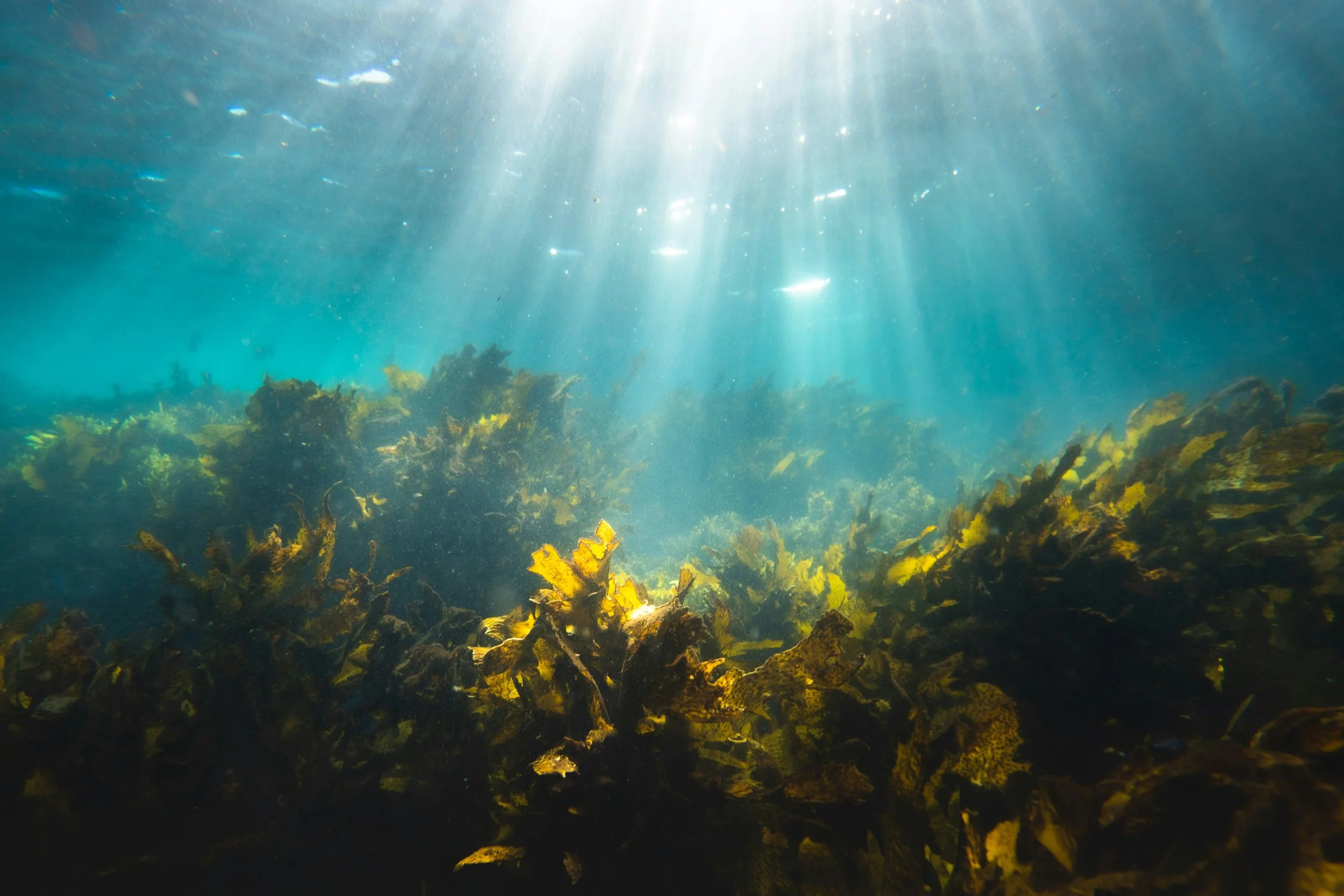
Seaweed fabric is an emerging class of bio-based textiles that blends marine biology, regenerative design, and advanced fiber technology. Derived from sustainably harvested seaweed, these fibers offer brands a pathway to reduce reliance on land-intensive crops and fossil-based synthetics while creating soft, breathable, next-to-skin textiles.
Seaweed fabric is not a single material — it comprises two primary technological pathways, each with distinct properties, trade-offs, and scaling considerations. When sourced and processed responsibly, seaweed-based fibers exemplify how circular and regenerative thinking can inform material innovation.
What Is Seaweed Fabric?
Seaweed fabric refers to textiles that incorporate marine algae into fiber systems, either as a functional additive or as the primary material. Today, two main commercial approaches dominate the market:
1. Seaweed-Enhanced Regenerated Cellulose Fibers (SeaCell™ — smartfiber AG)
Dried brown seaweed (macroalgae) is ground into a fine powder
Powder is embedded into dissolved cellulose (typically wood-pulp-based)
Fiber is regenerated using a closed-loop Lyocell process
Over 99% of solvents and water are recovered and reused
Seaweed compounds are permanently embedded within the fiber matrix
Lenzing’s role:
Companies like Lenzing AG enable large-scale production by supplying and spinning the regenerated cellulose backbone using industrial-scale, closed-loop Lyocell systems. While Lenzing does not source seaweed or develop seaweed polymers, its infrastructure allows seaweed-enhanced fibers to reach commercial scale under high environmental and traceability standards.
2. Seaweed-First Biopolymer Fibers (Kelsun™ — Keel Labs)
Seaweed biomass is processed to extract natural polymers
Polymers are wet-spun into continuous filaments
Fibers are stabilized for durability and integration into textiles
Designed to work with existing spinning, knitting, and weaving systems
Seaweed-first fibers reduce or eliminate reliance on wood-based cellulose, using marine biomass as the primary feedstock. This pathway is still early-stage and scaling from pilot to commercial production.
Performance & Material Qualities
Seaweed fabrics are primarily valued for softness, breathability, and skin-friendly comfort:
Smooth, soft handfeel, comparable to Lyocell or modal
Moisture-regulating and breathable
Lightweight, flexible, and drapable
Naturally biodegradable when unblended
Some fabrics made with seaweed fibers may also exhibit UV protection (UPF), though this depends on construction, weight, and testing, not fiber content alone.
It’s important to note that once cellulose is dissolved and regenerated, the fiber is chemically identical regardless of source. Seaweed’s minerals and antioxidants are not retained in a measurable way, so wellness claims should be treated cautiously.
The environmental story is also nuanced: harvesting or farming seaweed can impact ecosystems, just as forestry for Tencel or Modal does. The real benefits lie in closed-loop processing, biodegradability, and exploring alternative biomass feedstocks.Global Sourcing & Marine Systems
Seaweed is typically harvested from clean, temperate ocean environments, with careful attention to:
Species: Primarily brown macroalgae (Ascophyllum nodosum, Laminaria spp., Fucus spp.)
Harvest methods: Upper fronds are trimmed to allow regeneration; roots remain intact
Environmental impact: No land, freshwater, or fertilizers required; supports marine biodiversity
Traceability: Critical to ensure responsible sourcing and validate regenerative claims
Cellulose-based fibers rely on sustainably managed forest pulp (FSC® or PEFC® certified), while seaweed-first fibers minimize land-based inputs entirely.
From Ocean to Fiber: How Seaweed Fabrics Are Made
Seaweed-Enhanced Regenerated Cellulose (SeaCell™)
Seaweed powder is embedded in cellulose solution
Regenerated through closed-loop Lyocell spinning
Solvents and water are recovered at >99% efficiency
Permanent incorporation of seaweed compounds
Lenzing provides large-scale spinning infrastructure
Seaweed-First Biopolymer (Kelsun™)
Seaweed biomass is processed into polymers
Polymers are wet-spun into continuous filaments
Fibers are stabilized for textile performance
Integrates into existing production systems for knitting or weaving
The Shadow Side of Seaweed Fabric
Even with its low-impact potential, seaweed fabric has considerations brands must manage carefully:
Greenwashing risk: “Seaweed fabric” is a generic term; only specific technologies (SeaCell™, Kelsun™) are verified
Energy intensity: Fiber production, especially cellulose-based, remains industrial and requires energy
Blending compromises: Synthetic fibers reduce biodegradability and circularity
Scalability constraints: Marine ecosystems can be stressed if harvesting grows too fast
Early-stage technology: Seaweed-first fibers are still emerging and require careful vetting
Best Practices for Responsible Seaweed Fabric Sourcing
Brands should:
Specify fiber technology and supplier (SeaCell™ or Kelsun™)
Verify closed-loop or low-toxicity processing
Ensure sustainable, traceable seaweed harvesting
Favor minimal blending with synthetics
Use seaweed fibers in timeless, next-to-skin applications
Communicate clearly about performance, sustainability, and end-of-life
Circularity & End-of-Life
When processed responsibly, seaweed fibers align strongly with circular design principles:
Fully biodegradable (when unblended)
Soft yet durable, encouraging long garment life
Compatible with future chemical recycling for cellulose or biopolymers
Low-toxicity, with embedded natural compounds
Proper care — gentle washing and air drying — maximizes longevity.
Seaweed Fiber Suppliers
Fiber & Technology Innovators
smartfiber AG (SeaCell™) — Germany
Seaweed-enhanced regenerated cellulose spun via closed-loop LyocellKeel Labs (Kelsun™) — USA
Seaweed-first biopolymer fiber using marine biomass as primary feedstock
Industrial Enabler
Lenzing AG (Austria)
Provides closed-loop Lyocell spinning infrastructure for cellulose-based seaweed fibers
Final Note
Seaweed fabric is not a silver bullet — it is a category of materials in evolution. Its promise lies in responsible sourcing, transparency, and restrained scaling.
Used intentionally, seaweed-based fibers offer brands a rare combination of comfort, circularity, and regenerative inspiration — soft on the skin, gentle on the planet, and aligned with the principles of conscious material innovation.